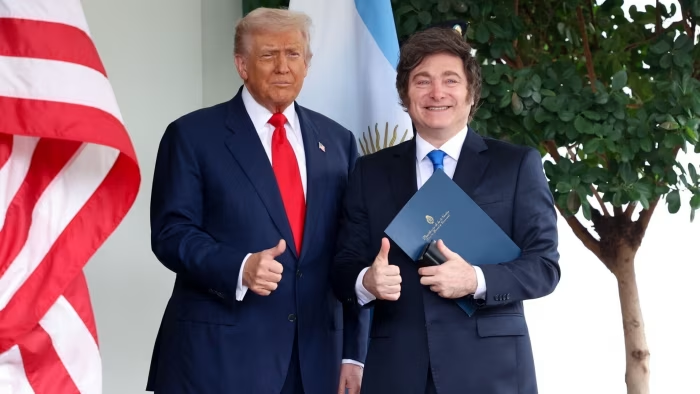
In a recent turn of events, the United States has pledged a significant financial package aimed at stabilizing Argentina’s struggling economy. This effort includes a substantial $40 billion commitment, which comprises a $20 billion currency swap line with the Argentine central bank and further plans for additional support in anticipation of upcoming debt payments. Yet, despite these large sums, the Argentine peso has continued to plummet, hitting an alarming new intraday low of 1,476 per dollar, starkly contrasting with 350 pesos per dollar just two years prior.
President Javier Milei’s administration, characterized by pro-market reforms and austerity measures, once held promise for economic revival. However, the recent cuts to public sector jobs and reductions in energy subsidies and welfare programs have sparked widespread discontent among voters. This dissatisfaction manifested in heavy losses for Milei’s La Libertad Avanza party in last month’s provincial elections in Buenos Aires, raising concerns about the imminent midterm elections in Congress. Analysts warn that if the party fails to secure at least 35 to 40 percent of the vote, Argentina’s assets could face further devaluation.
Interestingly, the forthcoming financial assistance from the U.S. seems to hinge on the success of Milei’s political agenda. This dependency could not only jeopardize his re-election prospects as citizens may perceive it as external interference but could also precipitate a more drastic decline in the Argentine currency should he lose.
From a U.S. standpoint, the strategy of exchanging stable dollars for the volatile Argentine peso raises concerns about its sustainability. Financial expert Fernando Marull has indicated that the U.S. Treasury has already acquired approximately $400 million worth of pesos through a series of purchases this month. While some short-term benefits may arise—such as a slight uptick in Argentina’s dollar-denominated bonds—many remain skeptical about the long-term viability of this financial lifeline.
Moreover, criticisms have emerged regarding the moral implications of U.S. foreign aid amid domestic challenges. As American farmers face difficulties and federal workers contend with a government shutdown, questions linger about the wisdom and cost-effectiveness of extending financial support abroad at such a critical time.
Overall, while the intentions behind U.S. aid to Argentina are clear, the long-term outlook remains uncertain, with many experts suggesting that propping up the peso might not lead to the sustainable economic improvement the region desperately needs.