The protracted conflict in the Middle East, which ignited on February 28, shows no signs of resolution as it enters its fourth week. Airstrikes and missile exchanges have underscored the precariousness of the situation, prompting multiple countries to intensify mediation efforts between the United States and Iran.
Despite these diplomatic overtures, escalating military deployments and fresh strikes indicate that a stable ceasefire remains elusive. The economic implications of the conflict have been immediate and significant, with oil markets experiencing volatility and global equities, alongside cryptocurrencies, reacting sharply to the evolving expectations surrounding the unrest.
On March 24, the U.S. submitted a new 15-point proposal aimed at facilitating peace, delivered to Iran via Pakistan. This proposal was formulated under the Trump administration, with a focus on providing a way out of a conflict that has begun to take a toll on the global economy. Components of the plan involve sanctions relief, limitations on Iran’s missile and nuclear operations, and international monitoring to ensure safe shipping routes through the vital Strait of Hormuz.
An Egyptian official involved in facilitating discussions characterized the proposal as resembling a comprehensive agreement, but cautioned that it would require significant effort to finalize the specifics if both parties were willing to negotiate.
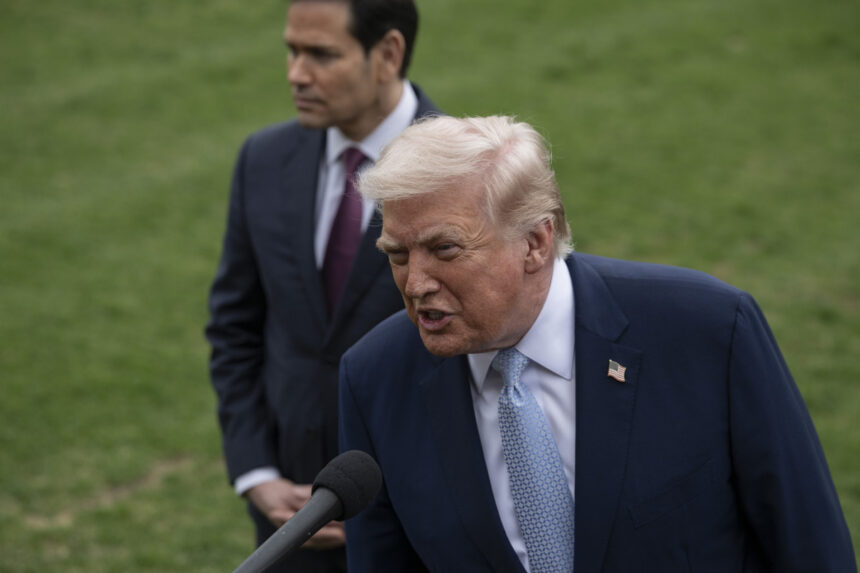
Conversing about negotiations on March 24, President Donald Trump stated that talks with Iran were ongoing and portrayed Tehran’s approach as constructive. However, Iranian officials quickly countered, dismissing both the proposal and the U.S. diplomatic efforts as unrealistic. Reports on March 25 indicated that Iran had formally rejected the U.S. framework and established its own conditions for any potential ceasefire.
Among these conditions are an immediate cessation of attacks and assassinations against Iran, assurances against future military actions, compensation for war damages, acknowledgment of Iran’s control over the Strait of Hormuz, and the cessation of hostilities across various fronts, including those involving Iranian allied groups. An Iranian senior official emphasized that Iran would determine when to conclude the conflict based on its own conditions.
Dismissing the U.S. proposal as “excessive,” an Iranian military spokesperson soured any existing diplomatic momentum, remarking that the inability of what they characterized as a “global superpower” to extricate itself from this situation reflected poorly on Washington’s standing.
The financial markets displayed a dual response to the recent developments. Following initial optimism surrounding the U.S. peace proposal, global risk sentiment improved, with major stock indices such as the Dow Jones Industrial Average rising significantly. Bitcoin also experienced a temporary upswing, briefly surpassing the $72,000 mark as traders bet on potential de-escalation.
However, following Iran’s swift rejection of the proposal, markets swiftly transitioned from optimism to uncertainty. Bitcoin’s price stabilized around $71,000, mirroring the hesitancy across various risk assets. As of the latest available information, Bitcoin traded at $71,386, Ethereum at $2,176, and XRP near $1.42, all reflecting modest gains despite the turbulent geopolitical backdrop.
This ongoing situation highlights the direct link between geopolitical developments and market dynamics, emphasizing the fragility of investor sentiment amid an uncertain and volatile international landscape.