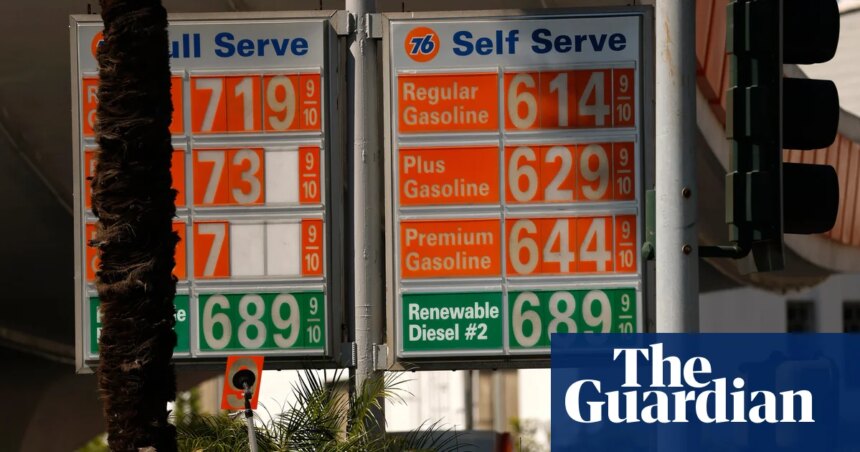
US oil prices are poised for further volatility as the ongoing US-Israel campaign against Iran enters its third week. Analysts predict that the national average for gasoline might reach between $3.80 and $3.85 per gallon by Monday, reflecting heightened concerns over the stability of oil and gas production infrastructure in the Middle East.
In a significant development last Friday, the US launched strikes on Kharg Island, a key oil processing facility in Iran. The tension escalates as Tehran continues to obstruct maritime traffic through the strategic Strait of Hormuz, which typically sees about one-fifth of the world’s oil supply passing through it. This blockade has raised alarms about potential further disruptions in global oil supplies.
Brent crude, the international benchmark for oil prices, showed fluctuations early Monday, rising to $106 per barrel before dipping slightly to $103. Meanwhile, US crude briefly touched $100 on Sunday, only to fall to $94 by mid-morning. As prices shift, Patrick De Haan, a prominent petroleum analyst, indicated that while $4 per gallon could be on the horizon, it is not yet expected.
Since the conflict escalated with US and Israeli strikes on Iran, the average price of regular gasoline in the US has surged from below $3 per gallon as of late February to approximately $3.70 today, marking a significant 23% increase in just under three weeks. Some regions have experienced even higher spikes, with California reporting averages exceeding $5 per gallon. In certain areas of Los Angeles, prices have reportedly topped $8 per gallon.
The unpredictable oil prices have also added to the turbulence on Wall Street. Equities opened higher on Monday following reports of declining oil prices, with the S&P 500 index rising about 1% by mid-morning. However, the stock prices of leading oil companies have demonstrated minor fluctuations, even as they reached all-time highs overall since the conflict began.
Executives from major oil companies have expressed their concerns to White House officials about the impact of the Strait of Hormuz blockade on supply chains. Darren Woods, CEO of Exxon, cautioned that the situation could lead to rising prices if it causes substantial supply issues for refined oil and gas products. Both Conoco and Chevron’s top executives echoed similar worries regarding the interruption of oil supply due to ongoing geopolitical tensions.