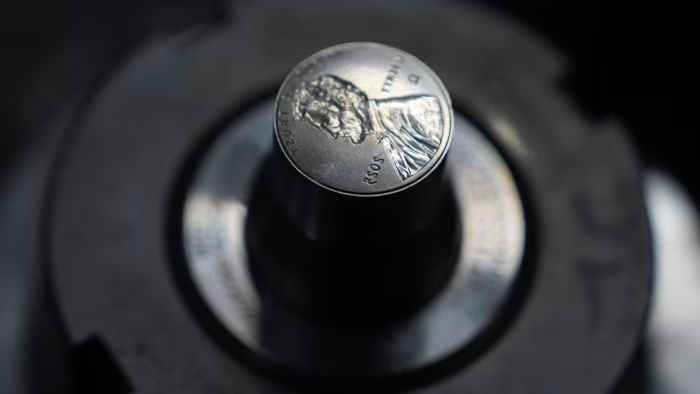
US retailers are bracing for challenges as the country moves towards eliminating the penny. The decision, influenced by President Donald Trump’s order to halt penny production earlier this year, has raised concerns among trade groups about potential new costs and legal issues following the last copper penny being minted. The US Mint ceased large-scale penny production in June, and the Federal Reserve has suspended distribution from many of its 165 coin hubs, leading to immediate ramifications for retailers across the nation.
Retail industry leaders have highlighted the urgency of the situation. Austen Jensen from the Retail Industry Leaders Association pointed out that while other countries like Canada and Australia phased out their smallest currency denominations over years, the US is acting rapidly, resulting in a significant scramble for retail businesses. Many of these businesses have already run out of pennies, causing frustration for both retailers and customers alike.
To navigate this crisis, retailers have begun informing cash-paying customers that their change will now be rounded. For instance, Joel Rampoldt, CEO of Lidl’s US division, noted that if customers are owed a penny, they may receive a nickel instead. However, this practice has proven stressful for staff, who have had to adjust to the new system continuously throughout their shifts.
The financial implications of rounding off change could be significant. According to the National Association of Convenience Stores, rounding down could lead to a daily sales decrease of approximately $1.25 million across the convenience store sector, which sees cash transactions constituting about half of its 125 million purchases each day. A preliminary analysis from the Federal Reserve Bank of Richmond suggests that rounding to the nearest nickel may cost consumers around $6 million annually.
The American Bankers Association has urged the Federal Reserve to reopen closed coin terminal locations, emphasizing the difficulties faced by retailers who need access to pennies. Additionally, some states enforce laws requiring exact change for specific transactions, complicating the situation further for retailers. These regulations lead to concerns about potential legal liabilities as cash customers often face disadvantages compared to those using cards or digital payments.
As retailers gear up for the crucial holiday shopping season, they are advocating for legislative relief to allow for rounding purchases to the nearest nickel without penalty. This urgency is underscored by the presence of recent bipartisan discussions in Congress about addressing these issues, especially in light of the recent government shutdown.
In a bid to tackle the shortage, retailers like Giant Eagle have devised programs to encourage customers to exchange their pennies for gift cards, effectively incentivizing cash transactions while trying to alleviate the shortage. With the ongoing challenges and the impending holiday season, these initiatives are crucial for maintaining customer satisfaction and operational stability in the retail sector.