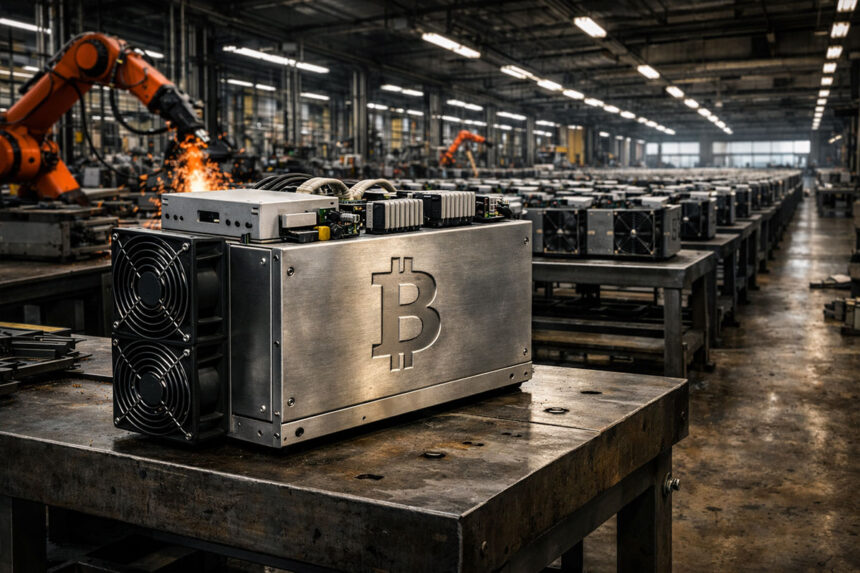
The United States has established itself as a leader in Bitcoin mining, accounting for approximately 38% of the world’s mining capacity. However, a significant portion of the hardware used in this operation—about 97%—originates from Chinese manufacturers. This reliance on foreign equipment, identified as a potential national security risk, has prompted Senators Bill Cassidy and Cynthia Lummis to introduce the Mined in America Act. The legislation is designed to mitigate this dependency by promoting domestic manufacturing and establishing a certification process for mining facilities.
The act aligns with existing federal programs to bolster domestic production and is positioned within a broader strategy to enhance national supply chain security. It proposes a voluntary “Mined in America” certification that would phase out the use of mining hardware from foreign adversaries. In addition, the bill codifies the Strategic Bitcoin Reserve, which was established by an executive order from former President Donald Trump in 2025, allowing the federal government to utilize forfeited Bitcoin.
One of the main arguments for the bill is that while the U.S. leads in Bitcoin mining, it is vulnerable due to its reliance on Chinese equipment. This disconnect was brought into sharp relief in late 2024 when U.S. authorities began to seize some Chinese-made mining equipment at ports, raising concerns about supply chain disruptions. These actions highlighted the risks associated with using foreign hardware in a sector that has increasingly been recognized as critical for national infrastructure.
Economic pressures also underscore the significance of addressing hardware dependence. Reports suggest that many Bitcoin miners are already operating at a loss, with around 15% to 20% of the global fleet struggling under current market conditions. This economic strain is compounded by the potential for operational disruptions related to customs enforcement or tariffs on foreign gear.
The implications of the Mined in America Act may extend beyond Bitcoin mining itself, positioning the sector within a broader discussion of American industrial policy. As digital assets grow in significance, Washington’s approach to crypto infrastructure is increasingly regarded as a critical component of national competitiveness, similar to policies governing semiconductors or critical minerals.
However, the passage of this legislation is not without challenges. Key questions remain regarding what qualifies as “American” hardware, especially as some Chinese manufacturers have begun to establish production facilities in the U.S. to circumvent tariffs. The bill’s certification framework will need to clarify the criteria for domestic manufacturing versus assembly or component sourcing from abroad.
Supporters of the legislation argue that if successful, the Mined in America Act could significantly reshape the mining hardware landscape, fostering a domestic supply chain that can reduce reliance on foreign vendors. Conversely, if the bill does not gain traction with miners, the U.S. may continue to depend on Chinese-origin equipment despite policy efforts to address this vulnerability.
The act is currently garnering broad Republican support and reflects a growing acknowledgment of crypto infrastructure as a vital element of U.S. industrial strategy. Yet, the true test will be whether domestic hardware capabilities can expand quickly enough to alter buying habits in a market where price and performance tend to dominate decision-making. If miners continue to rely on established foreign suppliers, the U.S. may maintain its leadership in mining operations while still being exposed to the risks associated with foreign supply chains.