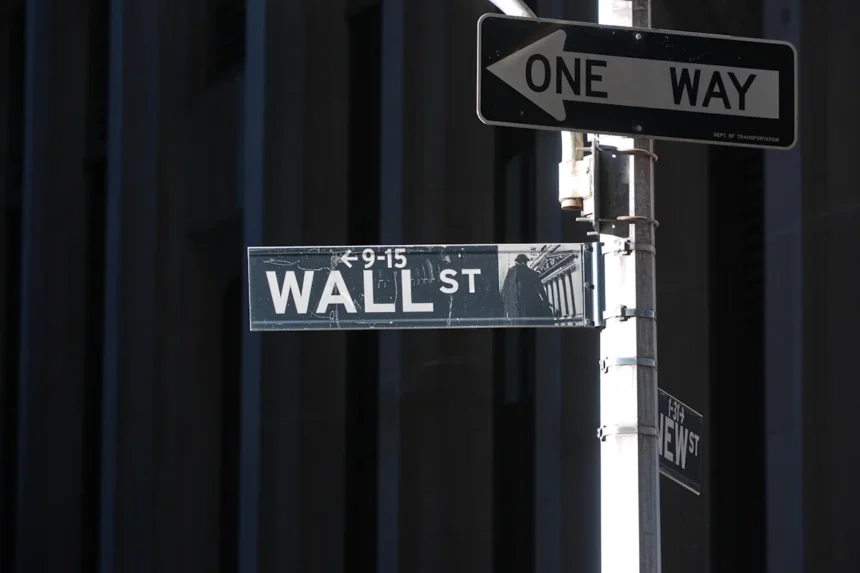
U.S. stock futures showed signs of weakness on Tuesday, retreating from a rally spurred by increasing optimism surrounding a potential resolution to the ongoing government shutdown. S&P 500 futures dipped by 0.2%, while Dow Jones Industrial Average futures remained relatively stable. In contrast, futures for the Nasdaq 100 saw a decline of 0.4%, following a robust surge earlier in the week, primarily driven by renewed excitement about a forthcoming boom in artificial intelligence (AI).
Market sentiment faced a challenge after CoreWeave adjusted its full-year revenue forecast downward following its quarterly earnings report released late Monday. The Nvidia-backed AI infrastructure company announced a delay from a data center partner, causing its shares to plunge over 8% in premarket trading.
In a contrasting move, SoftBank Group expressed confidence in the tech sector by liquidating its entire stake in Nvidia for $5.8 billion. This unexpected decision was made to fund SoftBank’s ambitious investments in AI development, even as Wall Street raises concerns over the substantial capital being funneled into tech breakthroughs and whether those investments will yield expected returns.
Meanwhile, hopes are building that the ongoing 41-day government shutdown may come to an end, following the Senate’s passage of a funding measure on Monday evening — a development now moving to the House for a vote. President Trump has vocalized his support for the bill, although it notably omits the extension of Affordable Care Act subsidies that Democrats have been advocating for. A separate vote regarding these tax credits is slated for December.
As the earnings season begins to wind down, attention shifts to Sony’s results, which will be released on Tuesday. Anticipation is also mounting around forthcoming earnings from Disney and Cisco later in the week.
SoftBank’s recent move to divest from Nvidia marks a significant moment for the company, which had substantially increased its stake in Nvidia to about $3 billion by the end of March. This decision, coupled with a profitable period at SoftBank’s Vision Fund, contributed to a remarkable net income of ¥2.5 trillion ($16.2 billion) for the company’s fiscal second quarter, far exceeding the anticipated average among analysts.
Founder Masayoshi Son has assembled a portfolio that includes high-profile AI entities such as OpenAI and Oracle Corp., which have bolstered SoftBank’s profitability and contributed to a staggering 78% increase in its share price over the quarter ending in September, the company’s best performance in nearly two decades.
Citi analyst Keiichi Yoneshima upgraded the firm’s forecasts, projecting a target price of ¥27,100 for SoftBank’s stock. His analysis aligns SoftBank’s valuation with OpenAI, estimating a future valuation for the ChatGPT developer to range between $500 billion and $1 trillion.
In a broader context, signs of slow growth from companies like TSMC have introduced cautionary signals regarding the sustainability of the AI sector’s upward trajectory, further fueling discussions about the possibility of an AI bubble.