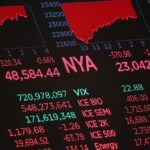
US stock futures experienced a positive shift Friday morning as investors geared up for a pivotal inflation report that could significantly influence the Federal Reserve’s future policy decisions. The Dow Jones Industrial Average futures rose by 0.2%, while contracts for the S&P 500 saw a gain of 0.3%. Additionally, Nasdaq 100 futures increased by 0.4%.
The anticipation surrounding September’s inflation data is palpable, with expectations suggesting that consumer prices are still elevated—potentially maintaining an annual inflation rate near 3%. The Consumer Price Index (CPI) report, scheduled for release at 8:30 a.m. ET, was initially delayed due to the ongoing government shutdown, which is approaching the second-longest duration in US history. This CPI report marks the first major economic release since the start of the shutdown, providing investors with a crucial update on the economy and possibly reshaping expectations around interest rate cuts from the Federal Reserve.
Despite the prevailing uncertainty, stocks are on track for weekly gains, with the S&P 500 climbing approximately 1.1% this week. Meanwhile, both the Nasdaq and the Dow are expected to show gains of around 1.2%.
In notable corporate news, Intel shares surged nearly 7% in extended trading after the semiconductor giant reported third-quarter revenues that exceeded Wall Street expectations. The positive performance has spurred optimism within the semiconductor industry. Intel’s head of investor relations, John Pitzer, highlighted the company’s strategic position in the artificial intelligence sector during an interview with Yahoo Finance, stating, “We believe we’re well-positioned to play a more significant role in AI.”
Additionally, Target’s shares experienced a slight uptick following the retailer’s announcement of plans to reduce its corporate workforce by about 8%, marking its first major layoff in a decade.
In the commodities market, oil is poised to achieve its largest weekly increase in months, driven by sanctions on Russia that are affecting market dynamics. This development adds another layer of complexity to the current economic landscape, as investors continue to navigate the implications of international events on domestic markets.