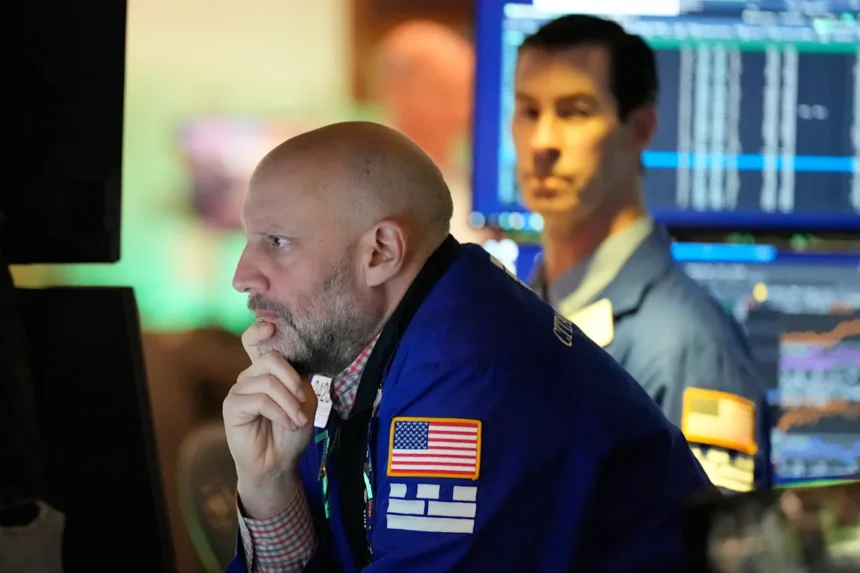
US stock futures showed modest gains on Wednesday, a rebound from the previous day’s drop, as investors remained attentive to the escalating conflict in the Middle East. Futures for the S&P 500 and the Nasdaq 100 rose approximately 0.2%, recouping earlier losses recorded during out-of-hours trading. Meanwhile, Dow Jones Industrial Average futures traded near unchanged levels, following a nearly 1% decline across major indices on Tuesday.
The ongoing conflict, now in its fifth day, saw renewed violence as Israel conducted additional airstrikes targeting Tehran, coinciding with the nation preparing for the funeral of Supreme Leader Ali Khameni, killed in recent attacks. Investors expressed concern that this turbulent situation could lead to increased inflation, a fear that significantly impacted the South Korean stock market, triggering its largest one-day crash on record.
Amid these tense developments, former President Trump announced via Truth Social that the US would provide risk insurance for maritime trading in the Persian Gulf, aiming to mitigate disruptions in tanker traffic through the vital Strait of Hormuz. This announcement follows Iran’s threats against vessels navigating that route, which had caused significant delays in maritime operations.
In the commodities market, oil prices surged by over 2% due to concerns regarding supply levels, with Brent crude futures trading near $84 a barrel and West Texas Intermediate futures climbing above $76. As a ripple effect, US gasoline prices at the pump also increased, with consumers bracing for volatile price shifts.
Looking ahead, investors are focused on the upcoming ADP private payroll report, which will offer insights into labor market conditions. Earnings reports this week are anticipated to be less impactful on market direction, with key updates from companies such as Broadcom, Costco, and Alibaba on the horizon.
On another front, gold prices rebounded, gaining approximately 2% as buyers capitalized on price dips in an environment laden with market uncertainties stemming from the ongoing conflict. Traders are balancing the risks associated with gold against a strengthening dollar, with the US currency index rising approximately 1.5% this week. Increasing bond yields and soaring energy prices have heightened inflation threats, prompting some investors to adjust their positions amid a broad sell-off in equities earlier in the week.
Goldman’s latest assessment indicated a cautious outlook on oil prices, refuting predictions of a surge beyond $100 per barrel despite the ongoing geopolitical tensions.
In premarket trading, certain stocks garnered attention: Strategy stock jumped by 8% following a rise in bitcoin prices, while Ross Stores saw a 5% increase due to better-than-expected quarterly results. Moderna’s shares rose 3% after the company announced a resolution to a dispute concerning its COVID vaccine. In contrast, GitLab’s stock fell 9% on expectations of slower sales growth for the year.
Meanwhile, foreign investment dynamics shifted as global funds began pulling back from Asia’s previously booming markets, in light of inflation worries driven by oil price hikes. Around $3.1 billion worth of South Korean shares were sold off this week, following record outflows of $13.7 billion the previous month. Similar trends were observed in Taiwan, with investors offloading approximately $3.6 billion. This trend predominantly affected high-flying chipmakers that had previously driven the markets to record levels, with significant declines noted in stocks related to artificial intelligence.
As market conditions evolve, investors remain vigilant, navigating a landscape shaped by geopolitical tensions and fluctuating economic indicators.