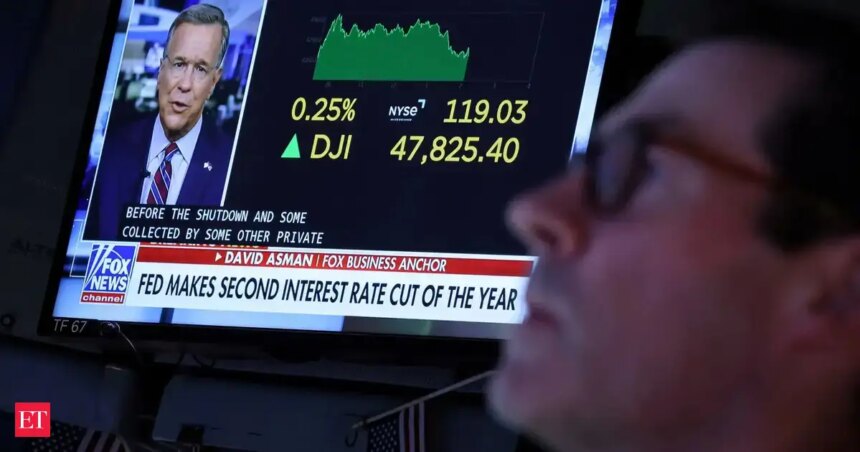
U.S. stock markets experienced a downturn today, with the S&P 500 declining by 0.3% and the Nasdaq dropping 0.6%. The losses were led by significant declines in major tech companies like Meta Platforms, which fell by 11%, and Microsoft, which slipped 2%. This downturn came despite the Dow Jones Industrial Average rising 179 points, or 0.4%, buoyed by strengths in the banking and healthcare sectors.
Meta’s share price suffered after the company increased its capital expenditure forecast for artificial intelligence to between $70 billion and $72 billion, heightening investor concerns about escalating costs. Microsoft, despite reporting a 40% surge in Azure revenue, also saw its stock dip as investment strategies shifted. Other tech giants, such as Nvidia, also faced declines as investors rotated out of big-cap technology stocks due to concerns about increasing expenditures.
Conversely, Alphabet saw its shares climb by 5% after delivering earnings that exceeded analyst expectations, reporting earnings per share of $3.10 against the anticipated $2.33, along with revenues of $102.35 billion. Outside of tech, shares of Eli Lilly jumped 5%, attributed to a raised revenue outlook for 2025 amid strong demand for its drugs. Comcast rose by 2.5% after surpassing third-quarter earnings estimates, and Restaurant Brands International gained 3% due to strong sales from Tim Hortons and international markets.
In geopolitical news, President Trump and Chinese President Xi Jinping concluded a significant meeting that resulted in a partial truce regarding tariffs. Trump announced a decision to reduce fentanyl tariffs on China to 10%, thereby lowering the overall import duties from 57% to 47%. China, in return, pledged to reduce fentanyl exports, increase soybean and farm product purchases, and extend a delay on rare earth export restrictions by one year. While shares of rare earth mining companies like MP Materials and USA Rare Earth saw gains due to this agreement, concerns remain regarding unresolved issues surrounding Nvidia chip exports and TikTok’s divestiture, as China offered no timeline for these discussions.
Market conditions were further complicated by comments from Federal Reserve Chair Jerome Powell, who indicated that another rate cut in December is “not a foregone conclusion.” This warning, following a recent 0.25% rate cut, raised fears among investors about a prolonged period before further monetary easing. Analysts noted that Powell’s remarks led to a recalibration of market expectations, with some suggesting this could slow the ongoing bull market.
The market faced continued volatility with mixed performances. As of early afternoon, the Nasdaq and S&P 500 were still down, while the Dow maintained its upward trend. Analysts observed that Wall Street might experience choppy trading as it absorbs the impact of earnings reports, geopolitical developments, and monetary policy signals. Despite the recent declines, major indices remain near all-time highs, reflecting a resilient investor sentiment amidst ongoing uncertainties.
In conclusions drawn from the day’s trading, the divergence between the S&P 500 and the Dow highlights a shift where investors are moving away from high-growth tech companies in favor of more stable sectors such as finance and healthcare. This rotation appears to be a response to both macroeconomic uncertainties and concerns over high spending in the tech sector.
The cautious investor sentiment today reflects broader market dynamics, wherein fluctuations driven by earnings reports, policy signals, and global trade relations contribute to an environment of heightened volatility. Looking ahead, analysts suggest that sector selection and diversification will play critical roles as investors navigate the evolving landscape of the stock market.