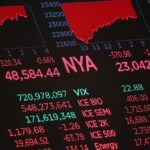
US stocks experienced a downturn in early trading on Monday as Wall Street pulled back from its recent record highs. The Dow Jones Industrial Average dropped 0.5 percent to 46,106.13, while the S&P 500 slipped slightly by 0.1 percent, ending at 6,655.80. The Nasdaq Composite Index remained flat at 22,630.79. This dip followed a week in which major indices had closed at record levels, buoyed by the Federal Reserve’s announcement of its first interest rate cut of 2025.
Market observers suggest that President Donald Trump’s recent immigration policy change may have influenced the stock market’s early weakness. On Friday, he ordered a $100,000 fee for new H-1B skilled worker visas, a move that could impact tech companies significantly. These firms, heavily reliant on these visas for skilled labor in the ongoing artificial intelligence boom, are responding cautiously to the uncertainty this change brings.
Analysts identified the immigration policy as a contributing factor for the market’s dip, alongside historical trends indicating that late September often sees a slow period for equities. Patrick O’Hare, an analyst at Briefing.com, noted that the stock market might simply be undergoing a “profit-taking breather,” especially after a robust September where the S&P 500 garnered a 3.2 percent increase and the Nasdaq Composite surged 5.5 percent, following a streak of record-setting sessions.
Despite the initial declines, stocks showed resilience and climbed back into positive territory during morning trading, with both the S&P 500 and the Nasdaq Composite reaching new all-time highs. Meanwhile, the dollar weakened against major currencies as the interest rate cut weighed on its appeal, and gold prices reached fresh highs. Crude oil prices fell approximately one percent, driven by concerns over production outpacing demand. In European markets, London managed slight gains, while both Frankfurt and Paris ended lower.
Shares of Amazon and Microsoft, which are major users of H-1B visas, saw declines on Monday. However, Kathleen Brooks, research director at the XTB trading platform, expressed confidence that the tech giants would ultimately cope with the visa fees, asserting that the current selloff in tech shares would likely be temporary—similar to previous tariff-related concerns that eventually subsided.
In a related note, shares in Porsche plummeted by eight percent following announcements of a significant slowdown in its transition to electric vehicles, citing weak demand. This announcement prompted parent company Volkswagen to issue a warning about a multibillion-euro impact, causing its shares to close nearly seven percent lower.
In summary, while early morning trading reflected investors’ apprehension, particularly concerning the new H-1B visa fees and historical market trends, the ability of major indexes to recover into positive territory highlighted resilience amidst uncertainty.