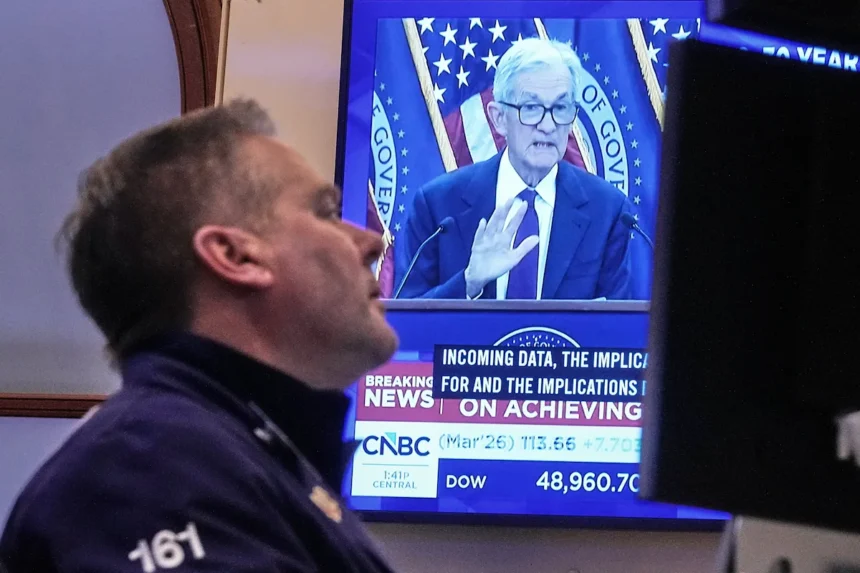
US stock markets closed positively in Monday’s trading session, reversing a recent downward trend influenced by concerns over artificial intelligence and recent sell-offs in precious metals. The Dow Jones Industrial Average rose approximately 1%, exceeding 500 points, while the S&P 500 gained about 0.5%. The Nasdaq Composite, known for its technology stocks, increased by 0.6%, bouncing back from earlier losses.
The performance in the commodities market was mixed. Precious metals, including gold and silver, faced significant fluctuations following a particularly challenging Friday, where silver experienced its largest single-day decline on record. Bitcoin also struggled, dropping below the $80,000 threshold for the first time since April, and was recently trading at approximately $78,000.
Amidst Wall Street’s reactions to corporate earnings, uncertainties surrounding Nvidia came to light after CEO Jensen Huang downplayed the company’s commitment to a $100 billion investment in OpenAI, following reports that plans are on hold. Nvidia’s shares fell over 2% as a result. Major tech companies including Amazon, Alphabet, and Advanced Micro Devices are set to release their quarterly earnings this week, with Palantir reporting subsequently on Monday.
Disney shares suffered a notable decline, falling more than 7% after the company reported lower profits year-over-year, despite beating adjusted earnings expectations. In the broader macroeconomic context, stocks benefited from unexpected improvements in manufacturing activity as indicated by the latest Purchasing Manager’s Index from both S&P Global and the Institute for Supply Management.
Adding to the market dynamics was the announcement of a new trade agreement between the US and India, reducing the tariff on Indian imports from 25% to 18%. This agreement came after President Trump spoke with Indian Prime Minister Narendra Modi, who also agreed to cease purchasing Russian oil.
However, this week’s economic data highlight—a pivotal jobs report—will be delayed due to a partial government shutdown that commenced recently, creating uncertainties surrounding future economic indicators.
In sector-specific movements, stocks of Infosys surged 4% following news of the trade deal, benefiting companies like Signet and William-Sonoma, which saw respective rises of 1.5% and over 4%. On the flip side, as geopolitical tensions eased, oil prices tumbled over 4.6%, with Brent crude dropping below $66 and West Texas Intermediate below $62.
The manufacturing sector exhibited signs of life, reported to be growing for the first time in a year, with January’s PMI readings exceeding expectations. CEO sentiments expressed a mixture of caution and optimism regarding future demand trends amid recent tariff-related pressures.
As investors continue to navigate the landscape of economic indicators and corporate earnings, they remain alert to forthcoming developments regarding President Trump’s Fed nominee, Kevin Warsh, and the potential implications for monetary policy. The overall sentiment appears cautiously optimistic as market participants adjust to the evolving economic and geopolitical landscapes.