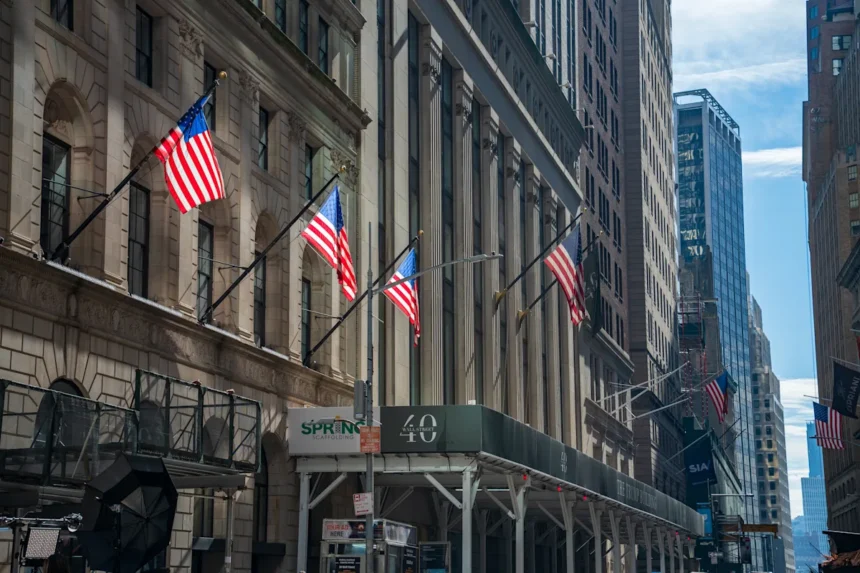
U.S. stocks experienced a significant rebound on Thursday, driven primarily by Nvidia’s impressive earnings report that stoked renewed enthusiasm for the artificial intelligence sector. The tech-heavy Nasdaq Composite surged approximately 2.5%, while the S&P 500 saw an increase of more than 1.8%. The Dow Jones Industrial Average also joined the upward trend, climbing 1.3%, which equated to a gain of over 500 points. This rally follows a modest recovery on Wednesday, breaking a four-day streak of losses.
In early trading, Nvidia’s stock jumped nearly 5% after the company reported a stronger-than-expected earnings beat along with an optimistic revenue outlook for the fourth quarter. CEO Jensen Huang expressed enthusiasm about the soaring demand for Nvidia’s Blackwell processors, indicating that concerns regarding a downturn in AI-related stocks may be unwarranted.
Adding to the market’s buoyancy, the September nonfarm payrolls report released by the Bureau of Labor Statistics provided fresh insights into the economy, as it indicated that the U.S. added 119,000 jobs during September—significantly higher than the anticipated 51,000 jobs. However, the unemployment rate did rise to 4.4%, up from 4.3% in August, which was contrary to expectations that it would remain stable. Following the jobs report, options traders adjusted their bets, now pricing in approximately 42% odds of a Federal Reserve interest rate cut at its December meeting, a sharp increase from previous estimates.
This report was particularly noteworthy, as it marked one of the first substantial glimpses into the state of the U.S. economy since the conclusion of the longest government shutdown in U.S. history, which had left investors uncertain about potential rate changes. The jobs data gained extra significance since the Bureau of Labor Statistics had canceled the October jobs report and delayed the November update until December 16.
Minutes from the Federal Reserve’s October meeting indicated a divide among policymakers regarding whether the cooling labor market or persistent inflation poses a greater risk to the economy, which contributed to ongoing uncertainty surrounding December’s monetary policy decisions.
In corporate news, Walmart also reported better-than-expected earnings, raising its full-year forecasts, although its shares fluctuated as investors gauged the implications for consumer strength heading into the holiday season.
In the cryptocurrency market, Bitcoin steadied around $90,500 following a shallow selloff that saw it dip below the $90,000 mark for the first time since April. Other cryptocurrencies showed mixed results, with Ethereum and BNB experiencing slight declines, while Solana posted a modest gain.
The positive momentum in U.S. stocks also saw a rally in the tech sector, particularly among chipmakers following Nvidia’s strong performance. Companies like Broadcom and AMD both saw their stocks rise by around 4%, while major tech players such as Google and Meta made notable gains of 3.3% and 2%, respectively. Tesla, with its ambitions in AI and robotics, also advanced nearly 6%.
Across Asia, tech stocks reflected the positive impact of Nvidia’s results, with shares of Taiwan Semiconductor Manufacturing Company and South Korea’s SK Hynix enjoying gains as well. The optimistic sentiment extended across various markets, contributing to higher indexes in both Taiwan and South Korea.
Overall, the day’s developments sparked renewed optimism in the stock market, particularly in technology and AI sectors, as well as a careful reassessment of labor market conditions against the backdrop of potential interest rate adjustments by the Federal Reserve.