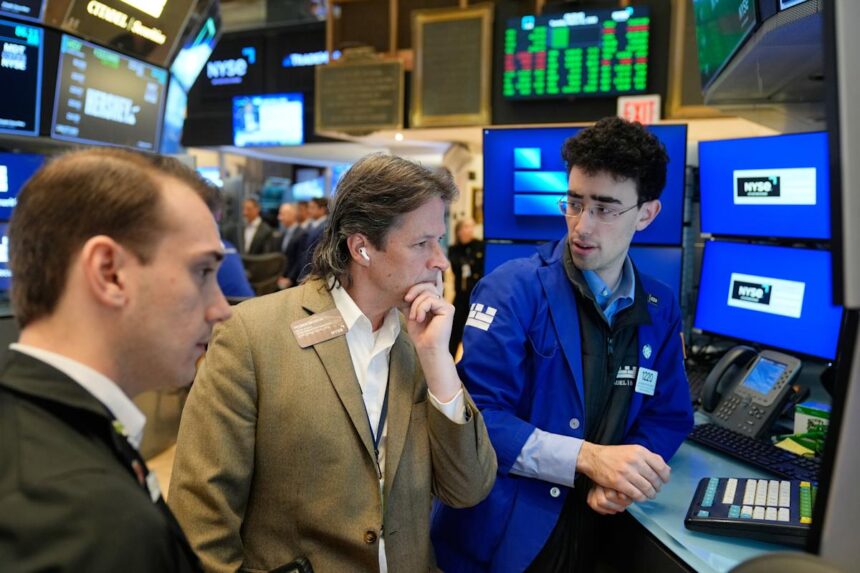
U.S. stocks displayed a mixed performance at the opening of Friday’s trading session, with the tech-focused Nasdaq gaining traction while the blue-chip Dow faced a decline. The shift comes after the release of the March inflation report, which revealed skyrocketing energy costs alongside anticipation surrounding ongoing discussions concerning the fragile ceasefire in the U.S.-Iran conflict.
Approximately 20 minutes into the trading day, the Dow Jones Industrial Average (^DJI) experienced a drop of about 0.4%, despite having entered positive territory for the year just a day prior. Meanwhile, the Nasdaq Composite (^IXIC) showed resilience with a rise of 0.4%. The S&P 500 (^GSPC), caught between the two, managed to stay afloat with an increase of less than 0.1%. After a seven-day rally, the S&P 500 aimed to achieve its first winning Friday since mid-February.
On Thursday, the Dow closed on a positive note, marking its return to green figures for 2026. Both the S&P 500 and Nasdaq remained just shy of erasing their losses for the year as of Thursday’s market close.
The newly released consumer price index data indicated a significant spike in inflation, with the annual headline rate soaring to 3.3% in March—the most considerable monthly increase since 2022. This upsurge from February’s 2.6% inflation rate is largely attributed to rising gas prices amid escalating tensions linked to the U.S.-Iran conflict.
Investor interest now turns to weekend talks regarding the U.S.-Iran situation, seeking indications that the current two-week truce could pave the way for a more durable peace agreement. Ahead of the crucial discussions, President Trump intensified pressure on Iran, urging the nation to remove its blockade of the Strait of Hormuz, which remains critically low in operational traffic—an essential artery for the global energy supply.
In commodity markets, oil futures remained relatively stable, pulling back from initial gains prompted by warnings from Saudi Arabia about production capabilities due to Iranian strikes. U.S. benchmark West Texas Intermediate futures traded just above $97 per barrel, while global counterparts, like Brent crude futures, dipped below $96.
The day began with stocks opening higher following the inflation data release that indicated prices rose largely in line with expectations. The Dow Jones, S&P 500, and Nasdaq each opened approximately 0.3% higher, with the S&P 500 on track to attain its eighth consecutive winning session.
In another sector, TSMC, the world’s largest contract chipmaker, announced impressive first-quarter revenues—up 35% and surpassing analyst forecasts, primarily driven by strong demand for AI applications. Shares of TSMC rose by 2% in premarket trading.
As financial and energy market conditions evolve with geopolitical developments, gold is poised for its third consecutive weekly gain, buoyed by demand for safe-haven assets amid enduring inflation concerns.
With these various economic signals and geopolitical tensions at play, traders and investors remain vigilant, awaiting further clarifications on both market trends and international relations.