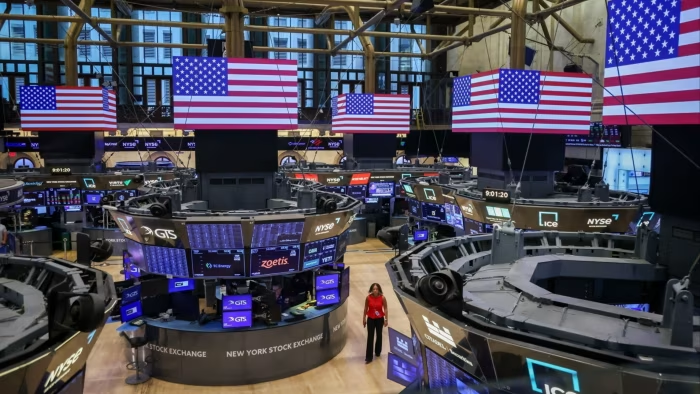
US stocks have experienced their longest monthly winning streak in four years, buoyed by enthusiasm around artificial intelligence, easing interest rates, and a reduction in trade tensions spearheaded by Donald Trump. The S&P 500 index climbed 2.4% in October, marking its sixth consecutive month of gains and a total of 36 all-time highs this year. Such performance represents the strongest streak for the index since August 2021.
Additionally, the Nasdaq Composite witnessed its best run since early 2018, with seven straight months of positive returns and an impressive 4.8% increase in October. This resurgence followed a sell-off in April triggered by Trump’s tariff announcements, which had initially spooked investors. Since then, the market has surged, fueled by robust corporate earnings and a burgeoning interest in AI investments.
Jim Bianco, president of Bianco Research, noted a shift from initial concerns about AI’s potential risks to a prevailing sense of optimism. “There was some trepidation about AI and its impact on the stock market at the start of the week, but that’s now totally given way to pure bullishness,” he remarked.
Despite some lingering worries about a potential AI bubble and signs of weakness in the US labor market, these concerns were overshadowed by strong earnings from Silicon Valley tech companies and a flurry of bullish spending announcements. Investors were further buoyed by the prospect of a one-year agreement between China and the US to temporarily suspend export controls on vital rare earths and chips.
The Federal Reserve’s second rate cut of the year, coupled with Jay Powell’s comments suggesting that a further reduction in December was uncertain, only caused a momentary dip in investor confidence. This rate cut coincided with a surge in mergers and acquisitions, with over $80 billion in corporate deals reported on Monday alone.
Venu Krishna, head of US equities strategy at Barclays, pointed to several factors contributing to market optimism: “There’s a greater consensus that the impact of AI is going to be real and transformational, earnings season is turning out well, we are at the beginning of a Fed rate-cutting cycle, and there’s optimism that there could be a reasonable US trade deal with China.”
Major tech companies, including Alphabet, Amazon, Meta, and Google, reported a combined capital expenditure of $112 billion in the past quarter, significantly investing in AI infrastructure such as chips and data centers. Amazon’s shares soared nearly 12% on Friday, adding approximately $300 billion to its market value following its cloud business’s strongest quarterly growth in almost three years. Meanwhile, Meta’s issuance of $30 billion in bonds to fund AI initiatives attracted a staggering $125 billion in orders, reflecting the highest demand for a US investment-grade corporate bond in dollar terms.
In a notable milestone, Nvidia became the first company to achieve a market capitalisation of $5 trillion, just one day after Apple crossed the $4 trillion mark for the first time.
John Bilton, head of global multi-asset strategy at JPMorgan Asset Management, acknowledged the ongoing bullish trends in the tech sector, stating, “Yes, this is a bull market that’s run a long way… but at the moment the tech firms just keep on delivering.” His belief that the market still has room to grow reflects a broader sentiment among investors, even in the face of concerns over potential bubbles.