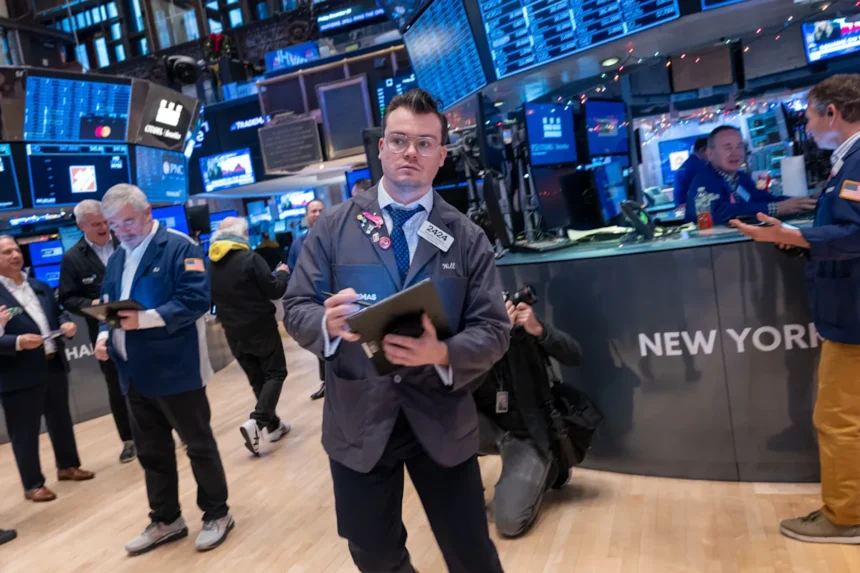
US stocks experienced a notable uptick on Friday, rebounding from a recent downturn as easing inflation concerns and reduced fears surrounding artificial intelligence (AI) injected a wave of optimism into Wall Street. The S&P 500 climbed nearly 0.4%, and the Nasdaq Composite saw a gain of approximately 0.5%, adding momentum to Thursday’s explosive rally. The Dow Jones Industrial Average also showed positive movement, advancing by 0.3%.
In the technology sector, Oracle’s stock surged following an announcement that China’s ByteDance would forge a joint venture with the US TikTok, marking a turnaround for the company amid a challenging week. Investor confidence in AI continued to flourish, bolstered by Nvidia’s stock, which jumped after reports indicated that the US government was reviewing the potential for sales of its H200 chips in China.
Overall, this week served as a crucial catch-up period for economic data, with investors maintaining their hopes for rate cuts in the coming year. Despite some economists cautioning about the data’s reliability due to limitations from a federal government shutdown, the inflation report released on Thursday demonstrated a surprising cooling trend in inflation rates. This positive news led to a rally, although some experts warned that the true state of price pressures might be better understood with January’s data.
The optimistic inflation figures, paired with indicators of a weakening job market, have rekindled speculation that the Federal Reserve may continue its easing strategy. A significant portion of traders is still anticipating two rate cuts next year, with a growing number increasingly favoring additional cuts. On Friday, attention turned to consumer sentiment insights from the University of Michigan, which indicated an uptick in sentiment for December, though the readings fell short of economists’ expectations.
Meanwhile, the bond market reacted to international developments, with the benchmark 10-year Treasury yield rising to 4.15% following the Bank of Japan’s decision to hike interest rates to their highest level since 1995. This uptick in global bond yields has ramifications for US markets, particularly as the attractiveness of the carry trade may diminish with rising Japanese rates.
Despite Thursday’s optimism, stocks are poised for notable losses as this week draws to a close. The S&P 500 and Nasdaq are both facing fractional declines, compounded by a broader market rotation away from technology stocks in December.
Looking ahead, US stock markets are set to remain open as usual on December 24 and 26, despite recent orders for a federal government shutdown.
Consumer sentiment data revealed a final reading of 52.9 for December, slightly improving from 51 in November yet still trailing the anticipated 53.5. Factors affecting consumer perspectives include ongoing pocketbook concerns, even as sentiment shows modest improvement among lower-income groups. Inflation expectations for the upcoming year also showed signs of decline.
In the tech landscape, Nvidia’s stock surged over 3% on news of a government review concerning the export of its H200 chips to China. This announcement has sparked enthusiasm among investors, pushing Nvidia’s shares higher along with other chipmakers like AMD, Intel, and Broadcom, who also experienced gains.
DraftKings entered the prediction markets sector, announcing plans for a mobile app that will enable users to bet on future events. This venture has led to a 1.7% rise in their stock as the trend of prediction markets gains traction under a more lenient regulatory environment.
US Treasury prices fell, leading to increased yields after the Bank of Japan implemented a noteworthy interest rate hike. The rise in treasury yields further reflects shifting dynamics in global finance.
Oil prices are on track for their second consecutive weekly decline amid concerns over a growing surplus. Meanwhile, precious metals such as gold and silver have rallied significantly this year, responding positively to the inflation data and anticipated interest rate cuts.
Overall, as investors navigate these market fluctuations, experts maintain a cautious outlook but also point to historical trends suggesting a potential end-of-year rally could still materialize.