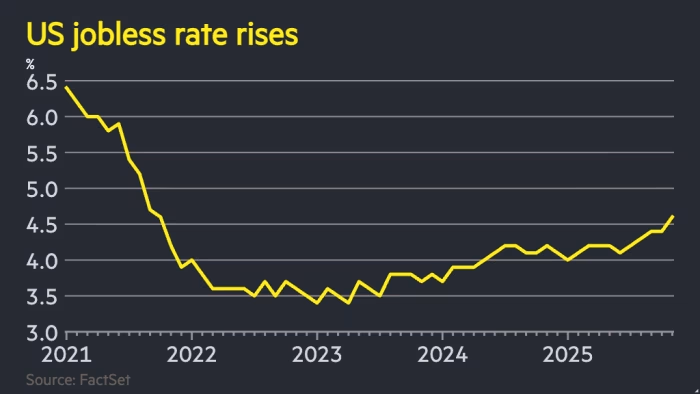
The latest labour market report has revealed that the US unemployment rate rose to 4.6 percent in November, marking the highest level in over four years and signaling ongoing weakness in the economy. Despite the addition of 64,000 jobs in November, the overall trend was dampened by a significant job loss of 105,000 in October, primarily attributed to a dramatic decrease of 162,000 jobs in federal government employment.
This uptick in the unemployment rate, the highest since September 2021, poses challenges for the Federal Reserve as it considers its monetary policy moving forward. Economists had anticipated a more modest addition of jobs, with projections around 50,000. The recent data adds to the complexity of evaluating the US economic landscape, which, while facing a weakening labour market and sustained inflation, is also expected to show solid GDP growth for the third quarter.
Delayed inflation data for November is expected to be released soon, following the cancellation of the October report due to a government shutdown. The unexpected rise in unemployment complicates the Federal Reserve’s recent decisions, including its recent rate cuts, which have brought borrowing costs down to a three-year low. The Fed’s focus appears to be shifting toward the labour market dynamics, as evidenced by the remarks from Fed Chair Jay Powell indicating that job numbers may be overestimated by as much as 60,000 monthly.
In addition to these trends, President Donald Trump has increased his calls for the Federal Reserve to lower interest rates further. Reports indicate that Trump believes borrowing costs should be reduced, a sentiment echoed by many in his administration. Following the report, short-term government bond yields responded by slipping, with two-year Treasury yields decreasing to 3.49 percent. Financial markets are currently pricing in the possibility of two quarter-point interest rate cuts by the end of 2026.
The rise in teenage unemployment, from 13 percent in September to 16 percent in November, further underscores the troubled labour market, although analysts note that fluctuations in this demographic can be common. Federal government employment continues to be on a downward trend, shedding an additional 6,000 jobs in November, with total job losses amounting to 271,000 since January.
In contrast, private sector hiring appears to be steady, adding a total of 121,000 jobs over the same two-month period. Some economists interpret this as a sign of resilience in the private sector, suggesting that the Federal Reserve may not be excessively worried about the recent surge in unemployment, provided that these trends stabilize in the coming months.