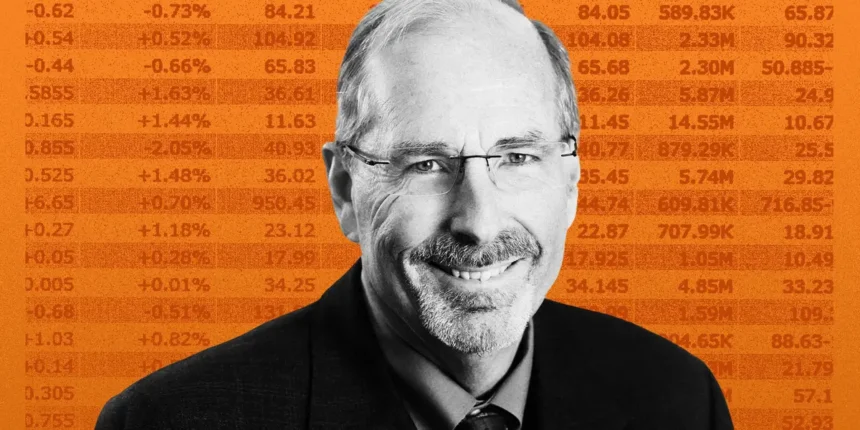
In a noteworthy shift within the stock market landscape, value investing is regaining momentum after a challenging period. The Smead Value Fund (SMVLX), co-managed by Bill Smead, has demonstrated a year-to-date increase of 6.75%. This trend aligns with Smead’s predictions regarding a rotation away from the high-flying technology and AI sectors towards undervalued areas of the market, such as energy, industrials, and small-cap stocks.
Smead, who advocates for a contrarian investment strategy reminiscent of Warren Buffett, expressed concerns over the inflated valuations in the AI sector. He cautioned in September about the potential consequences of investing heavily in AI infrastructure, emphasizing that the enthusiasm surrounding these technologies could lead to disillusionment as investors reassess the likelihood of significant returns. The current market environment is marked by skepticism about the future impact of AI, with concerns about its ability to disrupt various industries.
The valuation landscape reflects heightened investor concentration, with a significant portion of market capital tied up in a small number of stocks. According to Smead, this situation poses risks for the S&P 500, and leading financial institutions like Goldman Sachs and Morgan Stanley have echoed these sentiments. Smead noted that investors could face lackluster returns over the next decade, particularly if they remain heavily invested in a limited subset of high-performing stocks that may have peaked.
Moreover, he forecasted a potential shift where older investors, influenced by recent underperformance in growth stocks, might increasingly turn to bonds for security. This behavior could create a selling spiral that exacerbates the market’s volatility.
Amidst these market dynamics, Smead is focusing on three value stock opportunities. Notably, he has highlighted homebuilders DR Horton (DHI) and Lennar (LEN), which represent 4.9% and 3.82% of his fund, respectively. After a prolonged period of stagnation in the housing market due to soaring mortgage rates, there are signs of a turnaround. Smead anticipates that the demographic landscape, characterized by a large cohort of individuals aged 20 to 40, will drive a housing recovery as these potential buyers enter the market.
To illustrate his point, Smead remarked on the imbalance between the number of young adults seeking homeownership and the limited availability of homes in that demographic. He believes that as these prospective buyers start purchasing homes, demand will necessitate substantial construction efforts.
In a further demonstration of his investment rationale, Smead humorously compared finding funding for home purchases to a bank heist. He posited that investors might shift their resources from high-flying tech stocks to finance their new real estate ventures—highlighting a trend toward liquidity as mortgage rates begin to decline.
Additionally, Smead pointed to U-Haul (UHAL) as another promising stock, characterizing its shares as undervalued. The company’s business model positions it well to benefit from an anticipated housing recovery, as increased movement and storage needs arise. He emphasized the financial soundness of U-Haul’s balance sheet, suggesting that the market undervalues its leasing operations.
Overall, Smead’s investment strategy reflects a broader belief in the reemergence of value investing, as investors reassess their portfolios and seek opportunities in sectors that have been overlooked amidst the recent high-tech fervor.