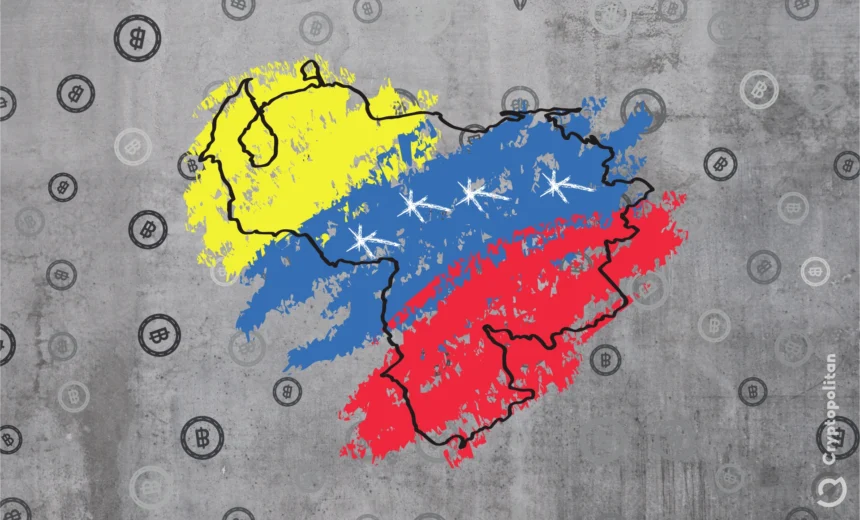
Venezuela is increasingly relying on dollar-pegged cryptocurrencies to alleviate pressures on its foreign exchange market, a move prompted by tightening US sanctions that have severely limited oil revenues and hard currency availability. The government has begun permitting private businesses to engage in the trading of USDT, a stablecoin from Tether that is directly tied to the US dollar. This strategy aims to maintain essential trade flows and ensure the importation of vital goods, including machinery and food.
Historically, Venezuelan importers relied heavily on central bank interventions to access US dollars, primarily sourced from oil exports. However, as the US intensified restrictions on the Nicolás Maduro administration, access to these dollars has become increasingly constrained. Recently, the United States renewed a limited license for Chevron to export Venezuelan crude, but it explicitly banned any direct payments to the Caracas government. Consequently, this has further shrunk the dollars available in the formal exchange market, exacerbating existing challenges from diminishing oil shipments. Data indicates that oil exports dropped by 10% just in July compared to the previous month.
In response to the dwindling dollar supply, which private estimates suggest saw the Venezuelan central bank inject approximately $2 billion into the currency market during the first seven months of 2025—a 14% decline from the same timeframe last year—businesses are increasingly turning to cryptocurrencies. Orlando Camacho, a lawmaker representing medium-sized businesses aligned with the ruling party, noted the limitations on currency availability, stating that there is always a ceiling to exchange resources.
Since June, the Venezuelan government has facilitated the sale of USDT to companies in exchange for the local currency, bolívars. Companies interested in this arrangement are required to utilize government-approved digital wallets, where the purchased cryptocurrency is credited before it can be utilized for payments to suppliers or resold through private transactions. Analysts from Ecoanalítica estimate that approximately $119 million worth of cryptocurrencies were acquired by businesses in July alone, a figure anticipated to grow as both sanctions and limited oil revenues persist. Reflecting on the evolving situation, one business figure remarked that “when one operation closes, others open,” illustrating the adaptive strategies businesses are adopting.
Vice-President Delcy Rodríguez has acknowledged the utilization of “non-traditional mechanisms of management in the exchange market” in discussions with business leaders, although she refrained from explicitly naming cryptocurrencies.
This shift towards stablecoins signifies a new trajectory in Venezuela’s complex relationship with digital currencies. The government previously introduced its cryptocurrency, the petro, in 2018, branding it as an oil-backed digital asset intended to stabilize the economy. However, that initiative faltered as it failed to gain traction among users and investors, leading to its quiet abandonment. In contrast, the current approach does not promote a state-backed cryptocurrency but instead leverages an already entrenched dollar-proxy.
According to reports from the Financial Times, cryptocurrency usage across Venezuela has surged by 110% over the year since mid-2024. However, Tether has also faced scrutiny concerning its role in jurisdictions under international sanctions. While the company has stated it adheres to the U.S. Treasury’s regulations regarding banned entities, it has not commented specifically on its usage in Venezuela in recent times.
For the present, the use of stablecoins appears to provide the Venezuelan government with a vital reprieve, allowing for the limited and regulated use of USDT to alleviate business pressures while preserving scarce physical dollars for its own strategic needs.