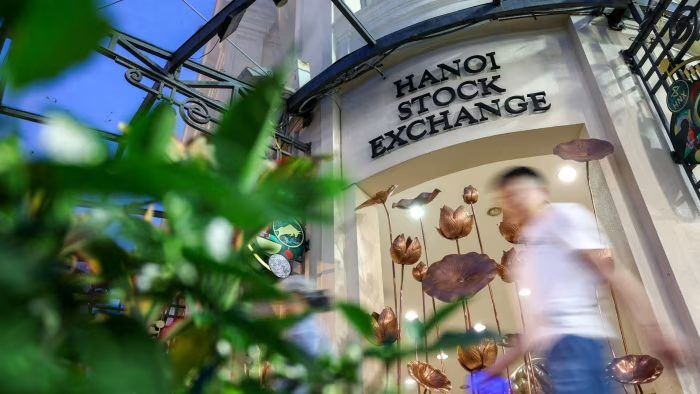
Vietnam’s stock market experienced a significant downturn on Monday, with the main index plummeting by 5.5 percent—the largest single-day drop since April’s global market sell-off. This decline followed revelations from a government investigation that disclosed extensive misreporting of bond sales by companies in one of Asia’s fastest-growing economies over the past decade.
The probe, conducted by Vietnam’s Government Inspectorate, scrutinized 462 trillion dong (approximately $17 billion) in domestic bonds issued from 2015 to 2023. The findings, released last Friday, highlighted various flaws in disclosure practices and the improper use of proceeds from some bond sales, prompting investigations into specific violations. Notably, Novaland, a major property developer in Vietnam, is under police investigation due to the allegations, though the company has denied any wrongdoing.
Despite a fruitful year thus far for Vietnamese stocks—rising 29 percent in local currency and 25 percent in dollars—this adverse news sent shockwaves through the market. The FTSE Russell had recently upgraded Vietnam’s market status from “frontier” to “emerging market,” enhancing its appeal to international investors, alongside a surge in exports to the United States, which persisted despite existing tariffs.
However, local investors are increasingly feeling the repercussions of a credit boom in the property sector that came to a standstill due to an ongoing crackdown on corruption, which had previously resulted in the prosecution of a sizable loan embezzlement case valued at $12 billion last year.
On Monday, stocks in real estate developers, particularly Novaland, as well as shares of brokers and certain banks, suffered the most, nearing a daily limit decline of 7 percent. Market analysts observed that the inspectorate’s findings were largely anticipated among investors and speculated that the sell-off was exacerbated by a recent trend of foreign investors offloading Vietnamese stocks after a robust performance this year.
In response to the inspectorate’s report, Novaland announced that it had repaid or settled 15 trillion dong of the nearly 35 trillion dong in bonds highlighted in the investigation. The company has been diligently restructuring its debts, including those related to international bonds, since 2023.
Investments in Vietnam had previously been limited for many mainstream investors due to restrictions on foreign ownership and the requirement for pre-funding trades. Consequently, many are now awaiting further guidance from MSCI, another major benchmark index provider, to confirm the market’s upgrade before making any substantial investments in Vietnamese stocks.
Despite these challenges, the Vietnamese government has set an ambitious target for economic growth of approximately 8 percent for this year and the years to follow, demonstrating its commitment to navigating the current economic landscape, even with ongoing U.S. tariffs averaging 20 percent.