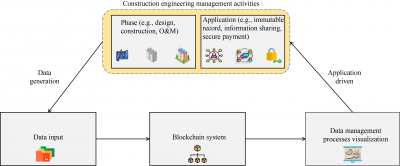
The integration of blockchain technology within construction engineering and management is witnessing a notable expansion, propelled by the rapid evolution of digital technologies. Despite this potential, the current implementations of blockchain-based data management processes (DMP) in the construction sector are often described as rudimentary, which hinders the broader adoption of this innovative technology.
In response to these challenges, researchers Liupengfei Wu, Weisheng Lu, Louis Chu, and Chen Chen have undertaken a comprehensive study titled “Visualizing blockchain in construction projects: Status quo, challenges, and a guideline for implementation.” The primary goal of this research is to establish a set of guidelines designed to enhance the visualization of blockchain-based DMP within the construction sector.
The study begins with the development of a conceptual model aimed at guiding the design of the research. A thorough review of 49 scholarly cases led to the discovery that the use of dashboards is increasingly common for visualizing blockchain-based DMP. However, the research also identifies four significant challenges facing blockchain visualization: data diversity, the selection of appropriate visualization tools, the types of visualization mediums, and the specific visualization domains pertinent to various construction projects.
To address these challenges, the researchers propose a five-step guideline for effectively visualizing blockchain in construction projects. The recommended steps are as follows:
- Targeting the visualization domain: Identifying the specific area within construction management where visualization is needed.
- Planning the blockchain visualization: Outlining the overall strategy and objectives of the visualization process.
- Choosing a visualization tool: Selecting the software or platforms best suited for the project’s needs.
- Selecting a visualization medium: Deciding on the appropriate format for delivering the visualization, whether through reports, dashboards, or other means.
- Fine-tuning the visualization solution: Making necessary adjustments to enhance clarity and impact based on user feedback and project requirements.
The effectiveness of these guidelines was further demonstrated through a case study involving a high-rise residential building project in Hong Kong that utilized modular integrated construction techniques. The results indicated that implementing the proposed visualization guidelines significantly increased user trust in blockchain systems, thereby encouraging its application in construction engineering and management.
The findings are detailed in the paper published in “Frontiers in Engineering Management,” where it not only addresses the existing hurdles but also paves the way for more effective integration of blockchain technology in the construction industry. The research is accessible online, allowing broader access to its insights and recommendations for industry practitioners.