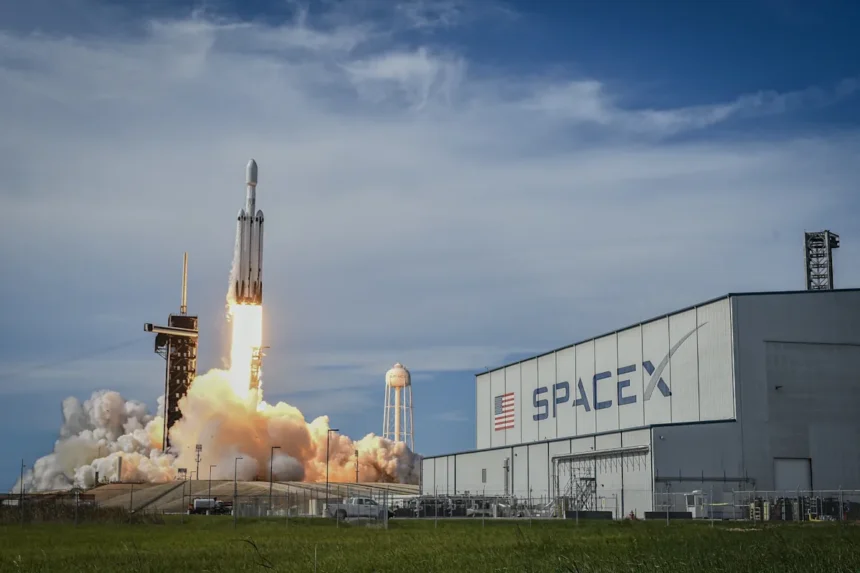
A potential shift is underway on Wall Street as the prospect of an influx of private companies, valued at approximately $2.9 trillion, considering initial public offerings (IPOs) gains traction. The interest peaks with the possibility of a SpaceX IPO, highlighting a new class of startups dubbed “centicorns,” which are valued at $100 billion or more in private markets. This new dynamic raises critical questions about investor appetites for companies led by controversial figures and characterized by minimal or nonexistent profit margins.
Experts suggest investors are likely to embrace these ventures. Paul Abrahimzadeh of 1789 Capital points out the substantial disparity between the median market cap of an S&P 500 company, nearly $40 billion, and the valuations being discussed for firms like SpaceX, which could reach up to $1.5 trillion in a public listing. Such figures could entice a diverse group of institutional and retail investors, making these firms “must-own” assets ahead of the prospective mega IPOs.
The IPO market has seen a slowdown since the record-setting $492 billion in 2021, with companies like SpaceX, Stripe, and ByteDance achieving private valuations that overshadow many public equivalents. This surge in private company valuations has left investment bankers lamenting the lucrative IPO fees they are missing. If SpaceX proceeds with a valuation near the $800 billion mark, it could stimulate a trend towards public listings among similarly valued firms.
Several industry insiders indicate that major listings may soon regain momentum. While some companies have previously held back due to soaring private valuations, signals are emerging that public offerings may be back on the table. Steve Studnicky of UBS emphasizes the potential pathway to public listings for these high-profile firms, suggesting a transformative impact on the IPO landscape.
SpaceX, in particular, catalyzes discussions surrounding the potential complications of an IPO for capital-intensive projects, like its Starship rocket development. While the company has ambitious plans for space exploration and satellite technology, the pressures of being publicly traded—particularly expectations for short-term profits—could challenge its existing operational ethos. Carissa Christensen, CEO of BryceTech, articulates concerns regarding how SpaceX’s independent culture could align with the demands of public market accountability.
Elon Musk has previously expressed reluctance to pursue an IPO until certain foundational goals, such as sending humans to Mars, are realized. This sentiment was echoed by President Gwynne Shotwell, reinforcing their long-term vision. Even if the trajectory toward a public offering shifts, the scale of a SpaceX IPO, particularly at a $1.5 trillion valuation, raises eyebrows regarding governance and investor confidence, especially given Musk’s commitments to multiple major companies.
The anticipated launch of a SpaceX IPO by 2026 could catalyze a wave of substantial IPO activity, potentially redefining the current investment landscape. Major IPOs exceeding $50 billion could overwhelm past market trends, as the capital raised would dwarf annual volumes typically seen on U.S. exchanges.
Industry analysts, including Colin Stewart of Morgan Stanley, note that several large-private companies may opt for direct listings instead of traditional IPOs. Such listings provide a unique opportunity for these companies to transition to public markets without the immediate need for capital. The landscape for direct listings has been shaped by successful past examples, such as Coinbase and Palantir, hinting at a favorable alternative for companies that have established robust shareholder bases.
Investor interests are shifting towards a need for liquidity in private markets, particularly as economic conditions can fluctuate dramatically. Historical patterns suggest that downturns may lead private fundraising to constrict, prompting companies to reconsider public offerings as a way to stabilize their financial footing and create opportunities for investors looking for returns.
As the landscape evolves, the question remains: will the allure of the IPO market draw these centicorns off the sidelines and into the public eye, or will the inherent challenges of scaling such massive private entities in the public market deter this trend?