In a dramatic turn of events, Wall Street experienced its most significant downturn since October, triggered largely by President Donald Trump’s aggressive stance on Greenland. This latest escalation has sent shockwaves through global financial markets, resulting in a notable decline in stock values and the US dollar.
President Trump has recently underscored his belief that Greenland is essential to US national security, citing the strategic interests of China and Russia in the Arctic region. His administration has threatened Denmark and several other European nations with steep tariffs if they do not agree to cede control of the self-governing Danish territory.
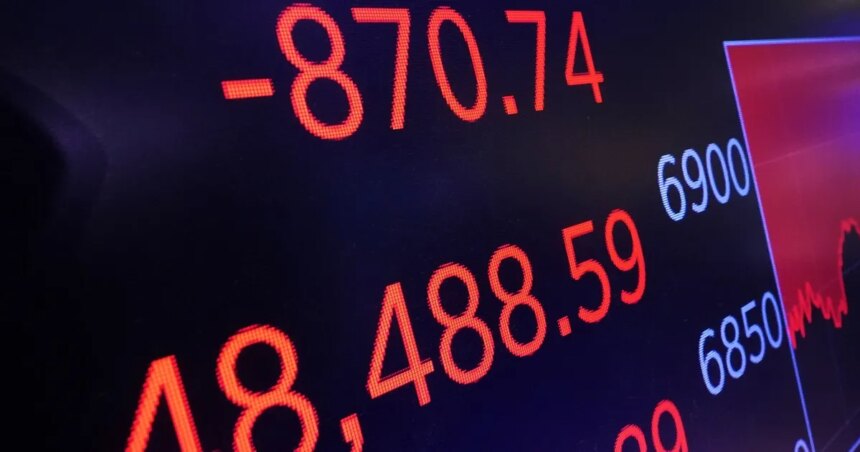
The rippling effects of Trump’s aggressive rhetoric were evident on Wall Street. The benchmark S&P 500 index plummeted by nearly 2.1%, marking a significant drop as investors reacted to the escalating tensions. The tech-centric Nasdaq Composite faired even worse, falling more than 2.4%, while the Dow Jones Industrial Average decreased by nearly 1.8%. These declines collectively represent Wall Street’s most severe performance decline in months.
Moreover, the US dollar—often viewed as a safe haven during market volatility—also took a hit, falling 0.8% against a basket of major currencies. The turmoil was not confined to US markets; European stocks also faced declines. The FTSE 100 in London closed approximately 0.7% lower, and Germany’s DAX index fell more than 1%.
Meanwhile, investors seemed to flock to gold, a traditional refuge during uncertain times. The price of gold surged nearly 2%, surpassing $4,700 per ounce, reaching record highs as the market continued to react to the unfolding geopolitical situation.
The negative sentiment extended into Asia the following day, with Japan’s Nikkei 225 and South Korea’s KOSPI both dropping by more than 1% during early trading. However, some of these losses were mitigated later in the morning.
Trump’s determination to bring Greenland under US control continues to exacerbate tensions in US-European relations, affecting NATO’s stability and the flow of transatlantic trade. Denmark has firmly stated that Greenland is not for sale, warning that any attempts at coercion could jeopardize the 32-member NATO alliance based on mutual defense principles.
As part of the escalating fallout, the European Union is set to hold an emergency meeting to deliberate on potential responses to Trump’s threats. This could include activating an anti-coercion mechanism to impose significant restrictions on US technology firms operating within the EU market.
When questioned about the lengths he would go to in order to acquire Greenland, Trump cryptically stated, “You’ll find out.” He remains optimistic about reaching a resolution, anticipating a favorable outcome in discussions about Greenland.
While attending the annual World Economic Forum in Davos, Trump expressed confidence in securing a deal, asserting that “things are going to work out pretty well.” Conversely, European Commission President Ursula von der Leyen emphasized the commitment of European leaders to collaborate with the US on bolstering Arctic security while maintaining an unwavering stance on national sovereignty. She articulated the shared concern that descending into a conflict would only benefit adversaries that both sides are dedicated to keeping from the strategic landscape, concluding that the European response would be assertive and unified.