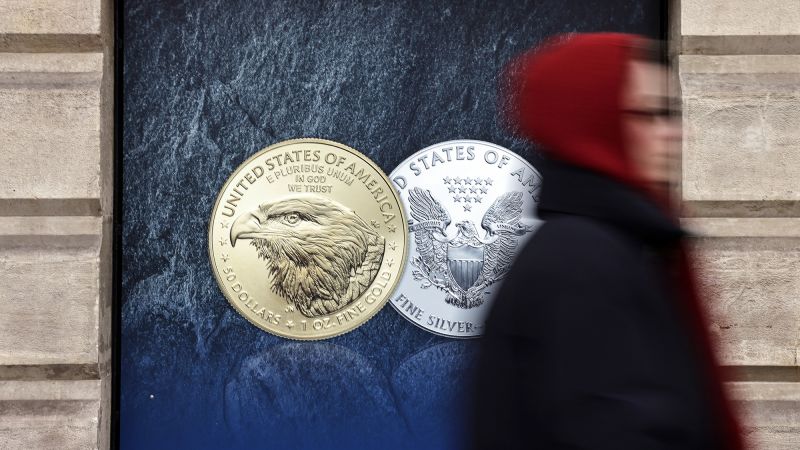
Wall Street is navigating through a turbulent landscape, marked by significant fluctuations in precious metals, a notable slump in bitcoin, and ongoing uncertainties surrounding technology stocks.
Recent days have seen gold and silver, typically viewed as safe havens in volatile markets, face dramatic price swings. After a robust rally throughout the year, gold, which peaked at over $5,550 a troy ounce, suffered a steep decline of 11% on Friday. Silver experienced an even sharper drop, plummeting by 31%. As of early Monday, gold was trading around $4,740, having fallen as low as $4,423 earlier that morning.
Bitcoin has not fared any better, dropping from over $83,000 to lows near $74,570 over the recent weekend, marking its lowest valuation since April. The cryptocurrency, which reached a record high above $126,000 in October, has now diminished by nearly 12% this year. In Asia, markets reacted negatively at the start of February, with South Korea’s benchmark Kospi index experiencing its worst trading day since April, sliding 5.26%.
The recent turbulence in previously strong markets raises questions about the sustainability of these asset classes. Analysts point to a speculative atmosphere that might have contributed to the highs and lows observed. Matt Maley, chief market strategist at Miller Tabak + Co, indicated that a surge in individual and momentum investors, alongside increasing leverage, characterized the recent activity. Similarly, Jim Reid of Deutsche Bank noted that the recent price movements exhibit a significant speculative component and could signal an overheated market.
Ole Hansen, head of commodity strategy at Saxo Bank, acknowledged that while corrections in such markets were expected, the rapid nature of the sell-off was unexpectedly stark. He emphasized the role of strong demand from Chinese investors in driving up prices, particularly for silver. Hansen commented that when discussions about gold and silver permeate social settings, it often indicates a nearing exhaustion of the rally phase.
While precious metals experience wild fluctuations, bitcoin continues to struggle amid geopolitical uncertainties, maintaining its position as an alternative asset but unable to garner positive momentum this year.
In South Korea, heightened concerns about corporate spending in artificial intelligence contributed to the market’s downturn, coinciding with the earnings season in the U.S., where major tech firms are assessed for their spending strategies on AI.
Despite the turbulence, U.S. stocks showed a positive start to February trading, with the Dow rising by 300 points (0.6%), the S&P 500 increasing by 0.45%, and the tech-heavy Nasdaq Composite climbing 0.65%.
Experts such as Kyla Rodda from Capital.com highlighted the volatility of precious metals, noting the potential for mania-like behavior in financial markets, particularly in an environment characterized by gamification and financialization.
The appointment of Kevin Warsh as Fed chair nominee by President Donald Trump has also shifted market sentiment. Monday morning witnessed slight declines in gold futures (down 0.4%) while silver futures ticked up by 0.7%. Regardless of the recent drops, year-to-date performance for gold is still up 9%, and silver has gained 12%.
South Korea’s Kospi has been among the leading stock market indices, enjoying a 76% surge in 2025 fueled by investor optimism towards AI. Looking ahead, Julian Emanuel from Evercore ISI maintains a positive outlook, anticipating a 13% rise for the S&P 500 this year, despite acknowledging the exuberance in recent trading patterns of metals and tech stocks.
Market analysts remain watchful for vulnerabilities, emphasizing the need to pay attention to China—an influential driver in recent demand dynamics, especially as local prices have traded at a premium to those in London.
In the coming days, Wall Street will receive several corporate earnings reports, including from tech giants like Alphabet and Amazon, alongside economic data releases such as January’s job report, which could further sway market movements. The U.S. dollar index was observed to be up 0.6% on Monday, indicating recovery after a disconcerting decline. Deutsche Bank projects a long-term trajectory for gold, aiming for a valuation of $6,000 per troy ounce by year-end, fueled by shifts among institutional investors away from dollar-denominated assets.