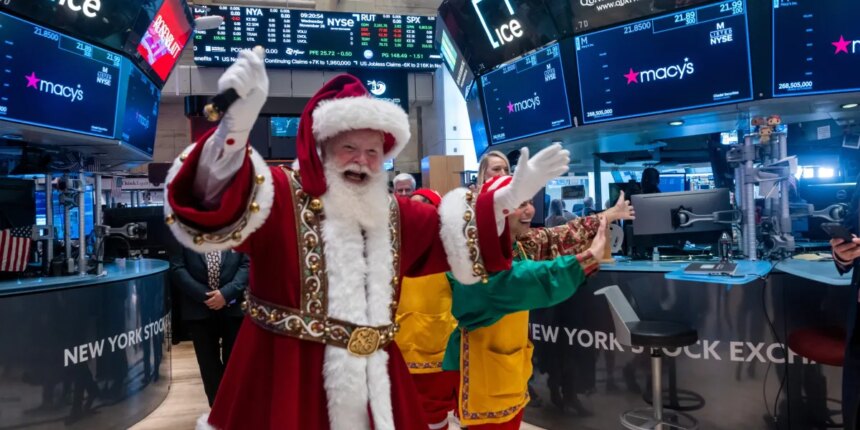
Wall Street is showing early signs of a festive season as the Santa Claus rally approaches, traditionally expected at the end of December. Recent market movements suggest optimism for 2026, with notable gains observed across major indices during the Thanksgiving-shortened trading week. The Dow Jones Industrial Average soared over 3%, the S&P 500 climbed nearly 4%, and the Nasdaq increased by more than 4%. This rebound follows a previous dip driven by concerns about an AI market correction and indications that the Federal Reserve may not reduce interest rates as much as investors had hoped.
Market expert Ed Yardeni has expressed optimism, stating, “Santa’s back,” as he noted the significant recovery following earlier panic-selling of bitcoin, which contributed to the market downturn. Yardeni predicts that the S&P 500 could reach 7,000 by year’s end, a milestone that would mark a 19% increase for 2025, following two consecutive years of over 20% gains.
Looking ahead, Yardeni remains bullish for 2026, projecting the S&P 500 could soar to 7,700, indicating a 10% rise from his 2025 outlook. He envisions the upcoming year as a continuation of the “Roaring 2020s,” a scenario he has championed since 2020, pointing to consistent GDP growth, consumption, and corporate profitability as indicators that the economy could avoid a broad recession, though some industries may experience “rolling recessions.”
Deutsche Bank shares a similar optimism, forecasting the S&P 500 will close next year at 8,000, representing a 17% increase from recent closing figures. Analysts at the bank credit the continued influx of capital across various asset classes as supporting factors, alongside rising corporate earnings and sustained capital allocation plans that promise robust stock buybacks.
Meanwhile, JPMorgan projects the S&P 500 might end at 7,500 in 2026, with potential for further growth to 8,000 contingent on Federal Reserve rate cuts. Analysts underscore the importance of factors like above-trend earnings growth, the AI sector’s capital spending surge, and fiscal policy changes associated with tax measures from the Trump administration. They also note that if inflation cools beyond expectations, the Fed may implement more cuts than currently anticipated, which could further bolster market performance.
As the year draws to a close, investor sentiment appears to be on the rise, signifying a potentially dynamic finish to 2025 and a prosperous start to 2026, characterized by the resilience of corporate profits and continuing market enthusiasm.