New York —
The ongoing conflict in Iran has sent ripples through global financial markets, causing a pronounced increase in oil prices and declines across stocks and bonds. As the situation escalates, the impact on market dynamics has been significant and widespread.
Since the onset of hostilities, oil prices have experienced a notable surge, driven primarily by the effective closure of the Strait of Hormuz and disruptions to oil production facilities in the region. This uncertainty regarding the conflict’s duration has exacerbated concerns. On Friday, Brent crude, the international oil benchmark, rose by 4.22% to close at $112.57 per barrel, marking its highest price since 2022. For context, Brent was trading at approximately $73 prior to the military engagement between the United States and Israel against Iran on February 28.
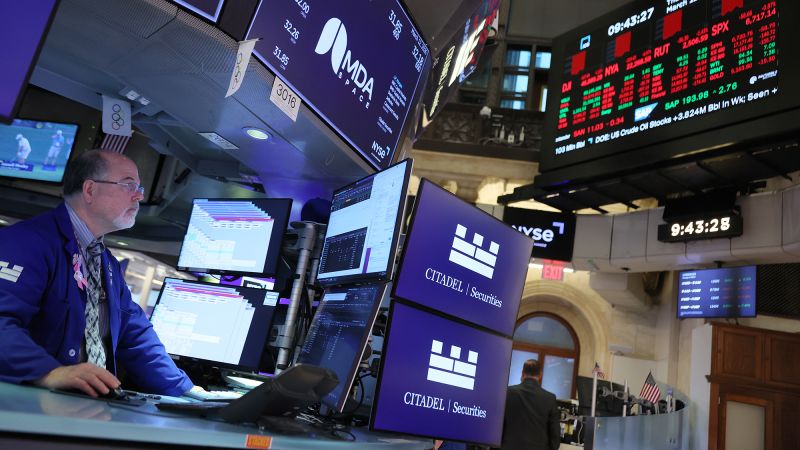
Consequently, major U.S. stock indices—the Dow Jones Industrial Average, S&P 500, and Nasdaq—are facing their worst performance in a year. The Dow reached a record high on February 10, but has since plummeted by 10%, entering correction territory. The Nasdaq has also fallen into correction, while the S&P 500 has decreased by 7.84% from its peak in late January.
The spike in energy prices has prompted central banks to reassess their strategies regarding interest rates, with some institutions reconsidering anticipated rate cuts or even contemplating hikes. Ed Egilinsky, managing director at Direxion, noted, “The conflict has significantly influenced the market landscape, creating a highly dynamic and unpredictable environment.” He emphasized that investors should brace for ongoing volatility across equity markets, as prices are expected to fluctuate until clearer guidance emerges.
Additionally, U.S. Treasury bonds have also taken a hit this month, resulting in increased yields. The yield on the 10-year Treasury note reached 4.48% on Friday—the highest level since July—before settling back to 4.43%. This rise in yields can be attributed to investors offloading bonds and recalibrating expectations for inflation, along with the Federal Reserve’s decision to maintain interest rates. This represents a significant shift from earlier in the year when markets anticipated potential rate cuts.
As Robert Tipp, head of global bonds at PGIM Fixed Income, explained, “That’s what’s striking fear in the hearts of bond investors. We’re seeing markets begin to question whether there will not only be no cuts, but may in fact be hikes.”
Overall, the interplay of geopolitical tensions and economic fundamentals is shaping a tumultuous landscape for investors, necessitating cautious navigation in the current climate.