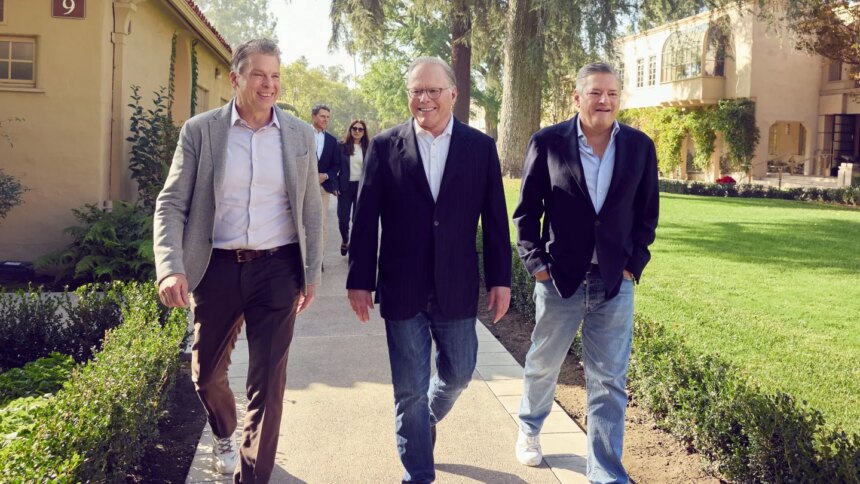
In a significant day for the entertainment industry, Warner Bros. Discovery (WBD) has officially turned down a hostile bid from Paramount Skydance, while simultaneously showcasing the company’s lean towards a deal with Netflix. WBD’s CEO, David Zaslav, welcomed Netflix co-CEOs Ted Sarandos and Greg Peters to the iconic Warner Bros. Studio lot in Burbank, highlighting the growing relationship between the two entities.
Photographs released by WBD capture Zaslav, Sarandos, and Peters as they toured the studio lot, posing in front of notable landmarks, including the Warner Bros. Water Tower. This visit was reportedly part of Netflix’s strategy to engage with leaders at the studio as it aims to solidify its $82.7 billion bid for WBD’s streaming and studios division, which encompasses significant assets like Warner Bros., HBO, HBO Max, and DC Studios.
While the images offer a glimpse into their meeting, specifics regarding the discussions exchanged during the visit remain undisclosed. However, industry insiders speculate that Sarandos and Peters were likely on a charm offensive intended to alleviate Hollywood’s concerns about Netflix’s future plans for Warner’s theatrical business.
Sarandos recently made headlines at a Paris event hosted by Canal+ Group, where he reaffirmed Netflix’s commitment to traditional theatrical windows, a point he emphasized should the acquisition of Warner Bros. materialize. “Our intentions when we buy Warner Bros. will be to continue to release Warner Bros. studio movies in theaters with the traditional windows,” he stated, referring to Netflix’s historical absence in the theatrical distribution realm.
On the same day as the Netflix visit, WBD’s board formally rejected Paramount’s unsolicited bid of $30 per share. In a statement, the board characterized the proposal as “inferior” to Netflix’s offer and highlighted “numerous significant risks and costs” associated with accepting Paramount’s bid. Samuel A. Di Piazza, Jr., chair of the WBD board, elaborated that the Paramount offer was deemed inadequate and failed to address persistent concerns raised by WBD in previous negotiations.
With the rejection of the bid, Paramount faces the challenging task of persuading WBD shareholders to consider their offer or propose a more competitive bid that exceeds Paramount’s current valuation of $108 billion. Di Piazza expressed confidence in the partnership with Netflix, stating that it presents superior and more certain value for shareholders, while expressing anticipation for the benefits of the prospective merger.
As the dynamics of the deal-making unfold, the entertainment landscape remains abuzz with speculation surrounding the future of WBD and its potential integration with Netflix, raising questions about the impact on Hollywood’s theatrical distribution model and overall business strategies.