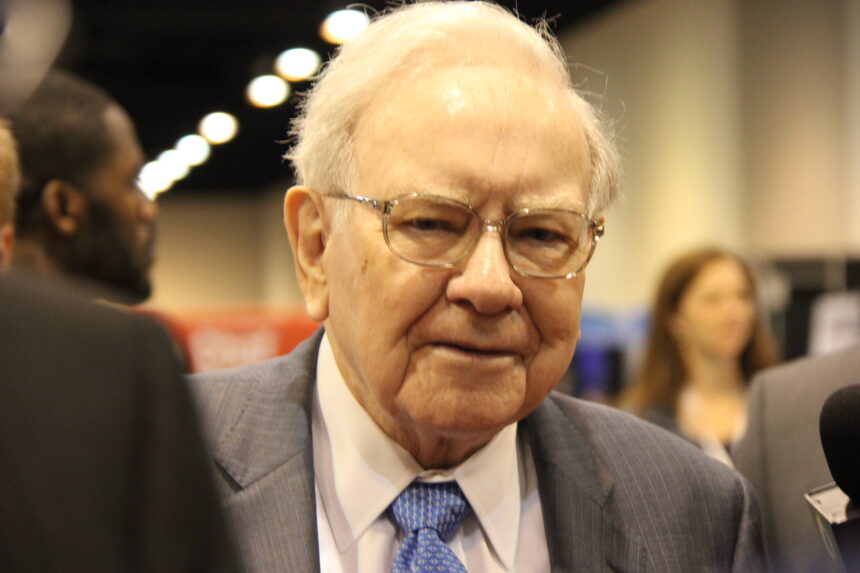
Warren Buffett has announced he will step down as the CEO of Berkshire Hathaway at the end of the year, a position he has held for over sixty years. As he hands over the reins to Greg Abel, a long-time fixture in the company, Buffett will remain as chairman of the board. This transition marks a significant moment in the history of Berkshire Hathaway, often regarded as one of the most successful companies in the world under Buffett’s leadership.
In light of this impending leadership change, Berkshire Hathaway’s recent third-quarter earnings underscore a cautious strategy regarding stock market investments. Released on November 1, the earnings report reveals that the company is amassing cash reserves, growing its cash and short-term U.S. Treasury investments to over $377.5 billion. This conservative approach provides insight into Buffett’s concerns about current market conditions and may serve as a warning to investors.
During the recent quarter, Berkshire was a net seller of stocks, purchasing approximately $6.4 billion while offloading around $12.5 billion. Additionally, the company executed a significant acquisition—a $9.7 billion deal for Occidental Petroleum’s petrochemical unit—marking its largest acquisition in three years. However, the lack of substantial investment activity reinforces the notion that Buffett’s team finds limited attractive opportunities in today’s elevated market.
The size of Berkshire Hathaway complicates investment decisions, as finding sizable companies that can effectively shift the company’s financials becomes increasingly challenging. Notably, Berkshire did not repurchase any of its own shares this year, indicating that even its own stock might be viewed as too expensive.
Buffett’s caution is further exemplified by the “Buffett indicator,” a metric Buffett himself endorses as a measure of market valuations. This indicator looks at the total market capitalization of the Wilshire 5000 compared to U.S. gross domestic product (GDP). Recently, this indicator has surpassed 220%, an unprecedented high, signaling potential market overvaluation according to Buffett’s long-held views.
Investors should heed Berkshire’s lack of buying activity as a potential signal of market conditions. Buffett’s investment philosophy emphasizes a long-term approach, advocating for prudence rather than speculation. While the stock market has exhibited strength this year, the underlying risk of a downturn looms.
As Buffett prepares to pass the baton to Abel, Berkshire Hathaway appears to be stockpiling cash, positioning the new CEO for future opportunities. Nevertheless, individual investors do not need to mirror Berkshire’s cautious strategy. Managing personal investment portfolios differs significantly from running a large institutional fund, and long-term investors can still engage in the market without panic.
For those feeling uneasy about market conditions, there are measures to mitigate risk, such as increasing cash allocations, diversifying investments through equal-weight S&P 500 funds, or seeking stability in quality dividend-paying stocks. In the face of transition and uncertainty, these strategies may provide a balanced approach to navigating the changing landscape.