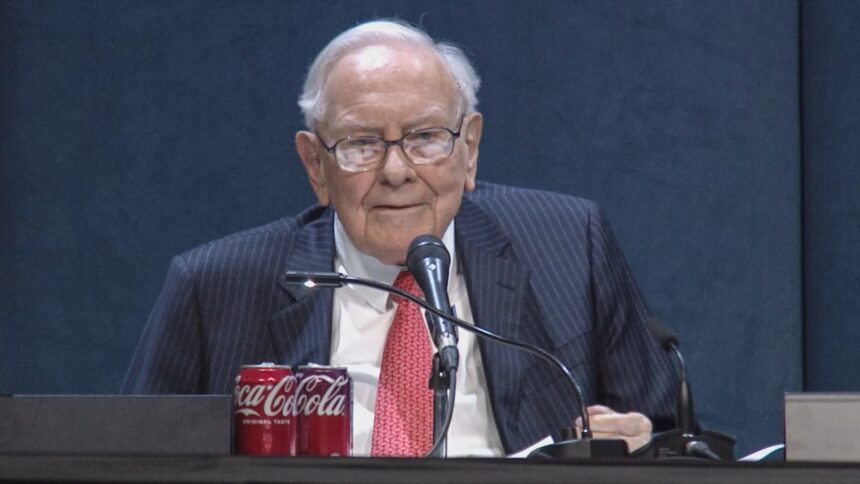
During a live appearance on CNBC’s “Squawk Box,” Warren Buffett addressed significant concerns in the stock market stemming from fears related to the coronavirus outbreak on February 24, 2020. As futures indicated a potential 3% decline in the stock market, many investors were understandably anxious; however, Buffett expressed an optimistic perspective regarding the drop.
Becky Quick, the host of “Squawk Box,” opened the discussion by referencing the alarming market drop of nearly 800 points that morning. Buffett’s response was unexpectedly positive, stating that he views lower stock prices as a beneficial opportunity for investors like his company, Berkshire Hathaway, which prides itself on being a net buyer of stocks over time. He likened investing in stocks to purchasing food, emphasizing that just as one would want food prices to drop, a decrease in stock prices offers a chance for savvy investors to buy at lower rates.
Quick pressed on the potential consequences of the coronavirus, seeking Buffett’s thoughts on whether the situation warranted panic. Buffett maintained that he did not possess any unique insights but focused on the long-term value of investments rather than short-term market fluctuations. He urged listeners to consider stocks as ownership stakes in businesses. He pointed out that evaluating the impact of short-term events shouldn’t overshadow the potential of American companies over the next couple of decades.
The discussion turned to the approach many investors have regarding market predictions. Buffett acknowledged that while some might wait for potentially better prices, they often miss the opportunity to invest wisely. He humorously challenged the notion that one could predict market movements accurately by stating that if he knew where the market was headed, his actions would reflect that knowledge. He encouraged viewers to make informed purchases based on smart valuations rather than emotional responses to daily news.
When asked about the significant sell-off, Buffett reiterated his favorable stance on purchasing stocks during downturns. He shared his history of witnessing numerous market declines, most of which have historically proven to be good purchasing opportunities in hindsight. He indicated that Berkshire Hathaway would likely not sell any holdings and might indeed take advantage of the lower prices to buy more stocks.
Buffett further elaborated that the daily news cycle is rife with both good and bad headlines, yet historically, the performance of the economy suggests an overall positive trajectory. He made it clear that external events, including health crises like the coronavirus, do not fundamentally alter the long-term outlook he has for American businesses. Buffett reiterated that the current market conditions present advantages for those who are interested in owning parts of reputable companies, viewing the lower prices as a more attractive entry point compared to previous days.
In conclusion, Buffett’s remarks throughout the interview conveyed a sense of resilience and a focus on long-term investment strategies. He emphasized that despite the chaotic market reactions, his investment philosophy remained steadfast: to buy businesses for the long haul, undeterred by momentary declines brought on by global concerns like the coronavirus.