Over the past three decades, the S&P 500 index has achieved a remarkable total return of 1,770% as of June 5, highlighting its status as a robust asset class for wealth accumulation. A $10,000 investment in this index in June 1996 would have grown to an impressive $187,000 today. The performance has been especially striking in the past ten years, prompting many to consider entering the stock market.
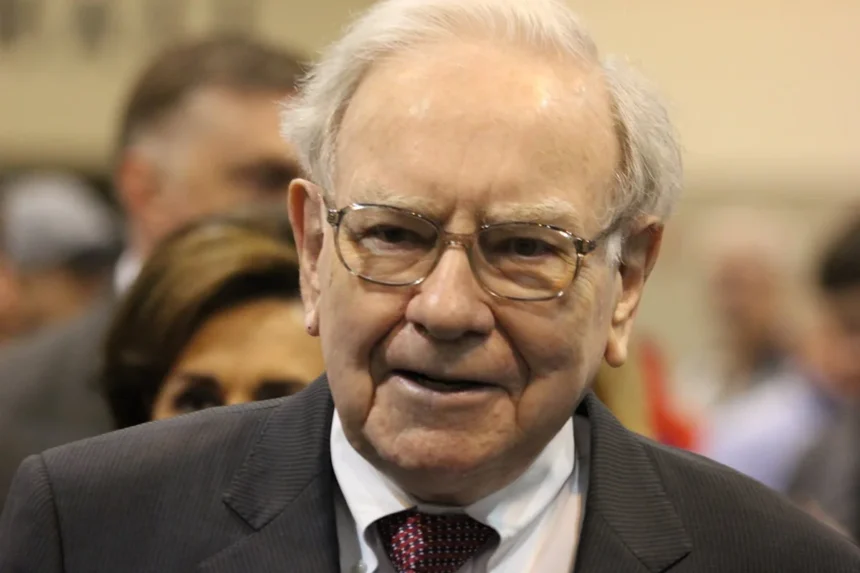
For newcomers, navigating the stock market can feel overwhelming. The barriers to entry may lead many potential investors to hesitate in shifting their savings into equities. However, renowned investor Warren Buffett offers valuable insights for those looking to explore this avenue.
Buffett, noted for his expertise in capital allocation and the long-term success of Berkshire Hathaway, advocates for simplicity. He frequently suggests that most investors consider purchasing a low-cost S&P 500 index fund. This recommendation is rooted in the acknowledgement that the average investor typically lacks the time, expertise, or interest to select individual stocks. Moreover, historical data reveals that many active fund managers fail to outperform the S&P 500 over extended periods.
Historically, active management strategies have not fared well against passive investment strategies, leading to disappointment for many investors. This raises the question: why do more individuals not opt for a more straightforward approach to investing?
One of the most accessible options for this passive route is the Vanguard S&P 500 ETF (NYSEMKT: VOO), which boasts an extremely low expense ratio of 0.03%. Over time, this allows investors to retain a larger portion of their returns compared to what they might pay in fees to active managers. The ETF mirrors the S&P 500 index, with major holdings including tech giants such as Nvidia, Apple, Microsoft, Amazon, and Alphabet, suggesting a strong focus in the information technology sector while maintaining exposure across various sectors of the economy.
Currently, the S&P 500 index trades at a historically high valuation, which has raised concerns about its return potential going forward. Despite a phenomenal trailing decade return of approximately 316%, many are questioning whether this performance can be replicated. Nonetheless, experts argue it remains a worthwhile investment given the robust profit growth and margins of leading companies—the standout performers of the current market.
For those who find current valuations concerning, employing a dollar-cost averaging (DCA) strategy may be a prudent approach. This method involves regularly investing a fixed sum on a monthly or quarterly basis, effectively reducing the necessity to identify an ideal entry point. Even small, consistent investments can yield significant results over time. For instance, an initial investment of $10,000 into the Vanguard S&P 500 ETF, followed by monthly contributions of $100, could grow to $382,000 over 30 years, assuming a historical 10% annualized return.
Before making a decision to invest in the Vanguard S&P 500 ETF, potential investors should consider alternative strategies. Analysis from The Motley Fool’s Stock Advisor team recently identified ten stocks perceived to offer substantial returns, none of which included the Vanguard ETF. Historical context supports this strategy; for example, an investment in Netflix when it was recommended in December 2004 would have multiplied significantly to $443,191 by now, and an endorsement of Nvidia in April 2005 would have turned a $1,000 investment into $1,258,838.
The Motley Fool’s Stock Advisor boasts an average return of 941%, substantially outperforming the S&P 500’s 206%. This significant difference emphasizes the potential benefits of exploring various investment avenues rather than solely relying on broad market indices. The ongoing quest for investment opportunities continues, and joining a dedicated community of investors could further enhance one’s financial journey.