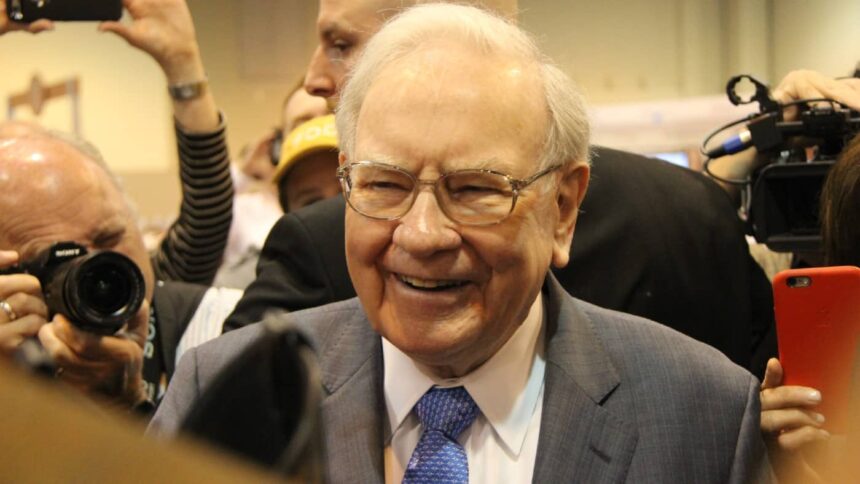
Billionaire investor Warren Buffett officially stepped down as CEO of Berkshire Hathaway on December 31, concluding a remarkable career marked by his strategic prowess in the stock market. As he embarks on retirement, Buffett shared valuable insights for investors looking to navigate the complexities of the current financial landscape as we head into 2026.
Buffett emphasized the importance of patience in investing, warning against the temptation to chase after market enthusiasm. With the ‘Buffett Indicator’ signaling a striking valuation of 230%, significantly above its historical average of 110%-130%, he advised investors to be more disciplined and discerning in their choices. “Because of market levels, ideas are few – but not zero,” he remarked, highlighting the importance of waiting for more attractive opportunities.
Despite the elevated valuations, Buffett noted that there are still niches worth exploring. In 2025, while Berkshire was a net seller of U.S. stocks, the company actively sought investments in specific sectors, including health insurance (UnitedHealth), residential housing (Lennar and D.R. Horton), American steel (Nucor), and even artificial intelligence within cloud computing (Alphabet). These moves illustrate Buffett’s ongoing commitment to identifying potential areas for growth, even in challenging market conditions.
On the subject of market volatility, Buffett acknowledged that fluctuations are an inevitable aspect of investing. Over the past six decades, shares of Berkshire Hathaway have experienced declines of more than 50% during three distinct periods. “Our stock price will move capriciously, occasionally falling 50% or so as has happened three times in 60 years under present management,” he stated, reassuring investors that such downturns are part of the journey. He encouraged a long-term perspective, reminding them that “America will come back and so will Berkshire shares.”
Reflecting on his success during turbulent times, Buffett cited Coca-Cola as a prime example of how strategic investments made during crises can yield substantial returns. He began purchasing shares of Coke in 1988, shortly after the 1987 stock market crash, highlighting the potential to profit from widespread market anxiety rather than succumbing to it.
As the leadership mantle passes to Greg Abel, Berkshire Hathaway enters a new chapter. While the transition may pose challenges, with Abel already showing a firm grasp of capital discipline and long-term strategy through his management of Berkshire Hathaway Energy, the company remains in a strong position. Armed with a robust balance sheet and over $380 billion in cash and equivalents, Abel has the flexibility to execute his vision for the future.
Though navigating the complexities of the business may present hurdles, especially given Abel’s emerging status compared to Buffett’s iconic legacy, Berkshire Hathaway shares still hold potential appeal for cautious investors in 2026. Buffett’s enduring wisdom and investment principles continue to resonate, asserting that the company remains a viable option for those seeking opportunities amidst uncertainty in the market.