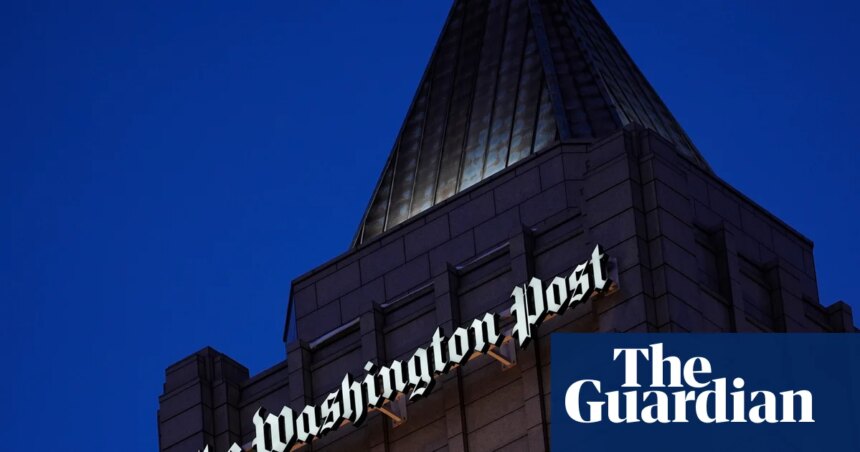
Under the leadership of former executive editor Marty Baron, the Washington Post achieved significant milestones, including 11 Pulitzer Prize wins and a newsroom expansion that brought its journalist count to over 1,000. However, the newspaper’s future appears increasingly precarious. Baron expressed concern regarding the current state of the organization in a recent interview with The Guardian, suggesting that the declining aspirations might lead to a decrease in subscribers. “I hope it’s not a death spiral, but I worry that it might be,” he stated.
This apprehension comes in the wake of one of the largest layoffs in the history of American journalism, which recently saw nearly one-third of the Post’s workforce cut, leaving the organization with around 1,600 employees. The layoffs targeted various departments, including sports, local news, and audio-visual teams, significantly diminishing the newsroom’s overall capacity and ambition at a time when the media industry is grappling with financial challenges and external pressures, including animosity from former President Donald Trump.
In a meeting with staff, current editor in chief Matt Murray assured employees that the Post has a robust plan intended to ensure its survival and future growth, despite the layoffs. Nevertheless, the substantial cuts have raised concerns among journalists and industry observers about the newspaper’s ability to compete with other outlets that specialize in similar coverage areas.
Baron attributed part of the Post’s current struggles to external factors, including the potential re-election of Trump in 2024, and suggested that owner Jeff Bezos may be prioritizing the interests of his other ventures—Amazon and Blue Origin—over the newspaper. “I think it’s important that Bezos remember the significance of the Post to American democracy,” he remarked, emphasizing the stakes for the integrity of the publication amidst its financial trials.
The newspaper’s publisher, Will Lewis, who was appointed to help revitalize the Post, has faced criticism for his lack of visibility and engagement with staff during these tumultuous times. Baron described him as “kind of the invisible publisher,” questioning his absence from critical discussions following the layoffs. Former Washington Post owner Donald E. Graham articulated his sorrow over the job losses, underscoring the talent and dedication of the employees affected.
The Post is now reorienting its focus on politics and government reporting as its primary journalistic goal, with the hope that this concentration will drive subscriber growth, despite staff reductions in various editorial areas. Competing political reporting entities such as Politico and Axios pose challenges to this strategy, leading to greater uncertainty regarding the Post’s market position.
The media landscape has witnessed a wave of layoffs, and the Post’s recent cuts may exacerbate subscription issues, especially given the prior loss of hundreds of thousands of subscribers following the shelving of a planned endorsement of Kamala Harris and a shift in the publication’s editorial direction.
Industry figures like Robert Allbritton expressed regret over the layoffs, recognizing the high caliber of the journalists affected. He noted that while they would undoubtedly find new opportunities, the current situation is undoubtedly challenging. Meanwhile, calls for Bezos to reassess his commitment to the Post have emerged, with the union representing most employees urging for a leadership change if Bezos is unwilling to prioritize the paper’s mission.
As discussions about the Post’s future continue, questions linger about its viability under current ownership and the possibility of a sale—a prospect that Baron indicated would require careful consideration regarding potential buyers. Concerns remain over the paper’s capacity to remain a leading voice in journalism at a time of significant uncertainty within the industry.