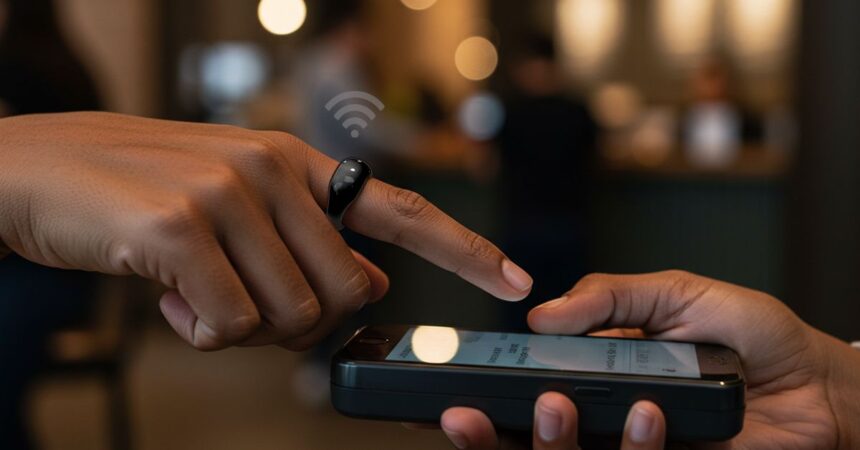
The landscape of payment technology is evolving, marked by a trend toward speed, convenience, and seamless integration into daily life. Innovations have progressed from traditional credit cards to modern mobile payment systems like Apple Pay and Google Pay, with the aim of minimizing friction in transactions. Now, the next frontier is the incorporation of payment technology into wearable devices, allowing users to conduct transactions through objects they wear or carry.
A prime example is the Apple Watch, which uses Near Field Communication (NFC) technology for features like contactless payments and digital keys. This ability allows the watch to interact with compatible devices, such as payment terminals and smart locks, enabling a simple tap-to-pay operation. As this technology evolves, it is beginning to create ripples in the cryptocurrency sector. Wearable devices like the Tangem Ring—a Swiss-made crypto hardware wallet designed to securely store digital assets—are entering the marketplace, sparking discussions about whether wearables could make cryptocurrency more accessible to the general public or remain exclusive to a niche group of early adopters.
The journey of wearables in the payment sector is not new. In 2014, the Nymi wristband made headlines as a heartbeat-authenticated Bitcoin wallet. Despite initial enthusiasm and extensive media coverage, the product shifted focus to enterprise use and abandoned its aspirations as a consumer crypto wallet. Similarly, MEVU’s gesture-payment bracelet was celebrated as a pioneering wearable bitcoin wallet, yet it never evolved beyond a proof of concept. Meanwhile, Vault0x aimed to introduce a wearable hardware wallet but similarly struggled to deliver a tangible product.
The challenges are substantial. Creating a secure, user-friendly wearable wallet necessitates condensing advanced security technology into compact, durable devices. This task has led many teams to pivot their focus towards enterprise solutions, resulting in numerous ambitious projects stalling at the prototype stage.
Amid these challenges, Tangem AG has emerged since its founding in Zug in 2017. Initially launching as an NFC card wallet, Tangem has expanded its product line to include the Tangem Ring and other privacy-focused offerings. The Tangem Ring functions similarly to their NFC cards, housing keys within a secure chip that has undergone rigorous audits. The ring is made from zirconia ceramic, ensuring resistance to scratches and moisture, and needs no charging. Activation is quick and simple, contributing to greater comfort for users who are daunted by traditional wallet management.
The appeal of wearable wallets lies in their potential to demystify the concept of self-custody. By integrating familiar actions—like tapping a device against a smartphone—these products make managing private keys more accessible to those who might otherwise feel intimidated. However, the exclusive nature that wearable technology can invoke raises questions. The Tangem Ring may not only serve as a secure store for crypto assets but could also become a status symbol, marking users as part of a specific social group. This duality propels a spectrum of reactions—from excitement to hesitation—about the implications of adopting such devices.
Security remains a crucial concern as well. Tangem’s reliance on a highly secure chip affirms its commitment to safety, yet the convenience of NFC technology does introduce potential vulnerabilities. Although there have been no reported breaches of Tangem wallets, experts caution about the inherent risks, emphasizing the importance of physical security and cautious practices for users.
Market forecasts indicate that the adoption of hardware wallets is on the upswing, with projections suggesting significant growth in the upcoming years. NFC-enabled wallets, in particular, are anticipated to see accelerated development, though they still represent only a small niche compared to traditional USB and Bluetooth devices.
Tangem’s commitment to minimalism and wearability has positioned it as a unique player in a competitive market. While competitors like Ledger and Trezor offer more feature-rich wallets, the wide adoption of self-custody solutions remains challenging due to their associated risks.
As payment technologies converge on the principles of speed and simplicity, wearable crypto wallets encapsulate both a logical evolution of this trend and a departure from conventional forms of financial interaction. Whether these devices democratize access to digital assets or become exclusive tools for the financially elite remains to be seen. The future of wearables in finance is a complex narrative, one that intertwines issues of design, security, and social implications as society navigates this burgeoning landscape.