The White House has taken action to intervene in a decision made by U.S. Steel regarding its Granite City Works plant in Illinois. This intervention stems from a national security agreement established three months ago with Japan-based Nippon Steel. In an official statement, the White House revealed that Commerce Secretary Howard Lutnick communicated the administration’s stance, indicating that President Trump would employ his “golden share” authority. This provision played a crucial role in the Trump administration’s evaluation of Nippon Steel’s acquisition of U.S. Steel, addressing national security concerns by granting the federal government oversight over specific corporate decisions related to domestic steel production.
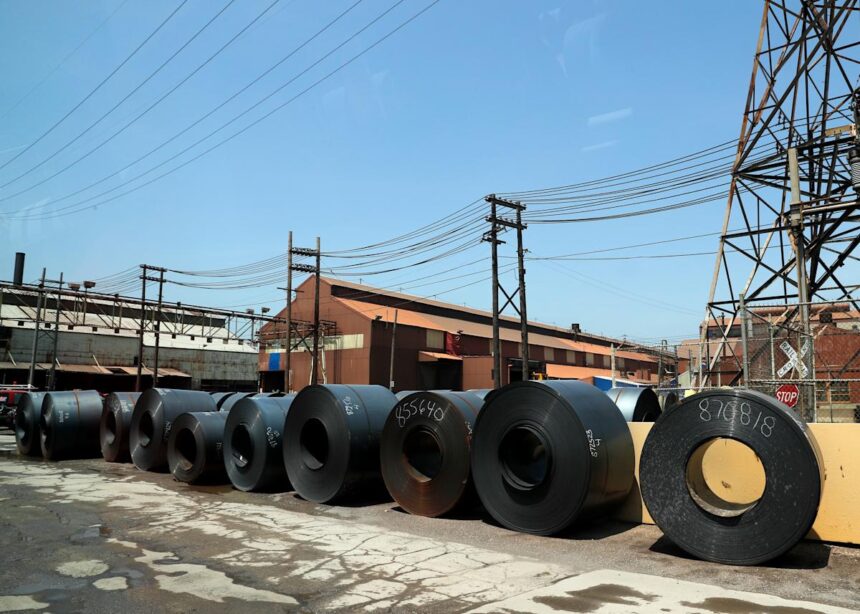
Following the recent intent by U.S. Steel to cease processing steel slabs at the Granite City facility, a serious matter arose regarding the employment of approximately 800 workers and the continuity of operations. Earlier in the month, the company had announced plans to streamline operations by focusing on its Mon Valley Works in Pennsylvania and Gary Works in Indiana, which followed a prior idling of the last operational blast furnace at the Granite City plant earlier this year.
However, in a surprising reversal, U.S. Steel announced on Friday that it would continue to supply raw steel slabs to the Granite City facility “indefinitely,” although the company did not specify the means by which this would be achieved. This announcement came amid the backdrop of the White House’s assertion that it had blocked the decision to reduce operations, raising questions about the internal dynamics at play.
While U.S. Steel acknowledged the positive relationship with the Trump administration, it refrained from providing details about discussions with the White House. The United Steelworkers union, which had previously expressed opposition to the Nippon Steel buyout, voiced concerns that U.S. Steel was attempting to evade commitments laid out in the agreement with the government. In response, U.S. Steel maintained that it remains in full compliance with the terms established between Nippon Steel and the White House.
As the conversation continues around the dynamics of domestic steel production and labor relations, the implications of this intervention and the ongoing partnership between U.S. Steel and Nippon Steel remain critical to watch.