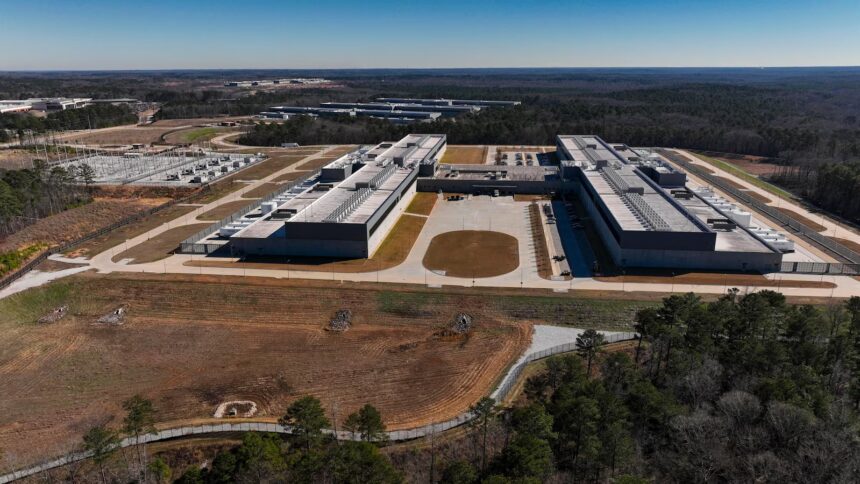
In a concerted effort to address escalating energy concerns, the White House, alongside a bipartisan coalition of governors, is urging the operator of the mid-Atlantic power grid to take immediate action to enhance energy supply and mitigate rising prices. A significant event is scheduled for Friday, focusing on the mounting voter anxiety regarding the substantial energy consumption associated with artificial intelligence in the lead-up to upcoming elections.
The initiative involves the White House’s National Energy Dominance Council collaborating with governors from states such as Pennsylvania, Ohio, and Virginia. They seek to prompt PJM Interconnection—a key player in the region’s power distribution—to conduct a power auction that would allow technology firms to place bids for contracts aimed at constructing new power facilities. The collaborative plan is expected to culminate in a statement of principles signed by the participating governors, echoing a proposal initially reported by Bloomberg.
“Ensuring the American people have reliable and affordable electricity is one of President Trump’s top priorities, and this would deliver much-needed, long-term relief to the mid-Atlantic region,” remarked Taylor Rogers, a spokesperson for the White House.
Among those anticipated to attend the event is Pennsylvania Governor Josh Shapiro. Sources indicated that Shapiro, a Democrat, has made his participation conditional upon including a provision to extend the limit on wholesale electricity price increases for consumers in the region.
However, in a notable absence, representatives from PJM Interconnection have stated they were not invited to the event. Spokesperson Jeff Shields affirmed, “PJM was not invited. Therefore we would not attend.”
The attendance of President Trump at the event remains uncertain as it has not been listed on his public schedule. Nonetheless, both he and the governors are responding to growing concerns over the financial pressures facing consumers and businesses due to the rising operational costs of energy-hungry data centers established to support the booming artificial intelligence sector. Compounding this issue, more Americans are reportedly struggling to keep up with their electricity bills.
Consumer advocates have pointed out that ratepayers within the mid-Atlantic electricity grid, which spans parts of 13 states from New Jersey to Illinois, as well as Washington, D.C., are already facing billions of dollars in increased charges to subsidize the energy needs of data centers, many of which are either operational or in development. Alarmingly, these rising costs have not translated into the construction of the additional power plants necessary to satisfy the growing demand.
The upcoming elections in November will be critical for communities burdened with soaring electric bills or grappling with disputes regarding the financial responsibilities tied to data centers that contribute to the surge in energy demand. Last year’s gubernatorial elections in New Jersey and Virginia, both hotspots for data centers, highlighted electricity costs as a central issue. In Georgia, Democrats successfully unseated two Republican incumbents on the state’s utility regulatory commission, tapping into widespread voter concerns over economic-related challenges.
Economic anxiety is resonating with voters in New Jersey, Virginia, California, and New York City, which are pivotal territories as Democrats and Republicans prepare for a heated debate over energy costs and affordability—a matter likely to intensify during the ongoing midterm election cycle.
Furthermore, data compiled by consumer advocacy organization PowerLines indicates that gas and electric utilities have sought or achieved rate increases exceeding $34 billion in the first three quarters of 2025, a figure that is more than double compared to the same timeframe a year earlier. As the stakes rise, the outcome of this initiative and the resulting effects on energy policy may significantly influence the electoral landscape.