Demolition crews have commenced bulldozing the East Wing of the White House to make way for a new ballroom, a move that President Donald Trump has touted as incurring “zero cost to the American taxpayer.” However, a recent report reveals that funding for the estimated $300 million project will primarily come from donations made by some of the country’s largest corporations and prominent Trump supporters, as revealed by a CNN analysis of a donor list released by the Trump administration.
For months, Trump has been actively soliciting donations, showcasing architectural renderings and scale models of the new ballroom to visitors in the Oval Office. The funding is being funneled through private, tax-deductible contributions allocated to the Trust for the National Mall, a nonprofit organization. Although the president has claimed he will cover some of the expenses personally, specifics on the amount he intends to donate have not been disclosed. Notably, Google has made a significant contribution of $22 million toward the project, attributed to a legal settlement related to Trump’s previous ban from YouTube.
In light of the ongoing demolition, a closer look reveals the companies and individuals footing the bill for this extensive renovation. Among the key donors is Miriam Adelson, a billionaire and prominent casino mogul, who, alongside her late husband Sheldon, has contributed over $30 million to various pro-Trump PACs since 2016. Her charitable foundation, which aims to bolster the state of Israel, is among notable contributors, and she received the Presidential Medal of Freedom from Trump in 2018.
The Altria Group, a well-known name in the tobacco industry, has also shown substantial support, donating $2.5 million across multiple Trump fundraising initiatives since 2017. Meanwhile, tech giants like Amazon and Apple have contributed as well, with Amazon donating $1 million to the 2025 inaugural committee and Apple CEO Tim Cook personally contributing $1 million.
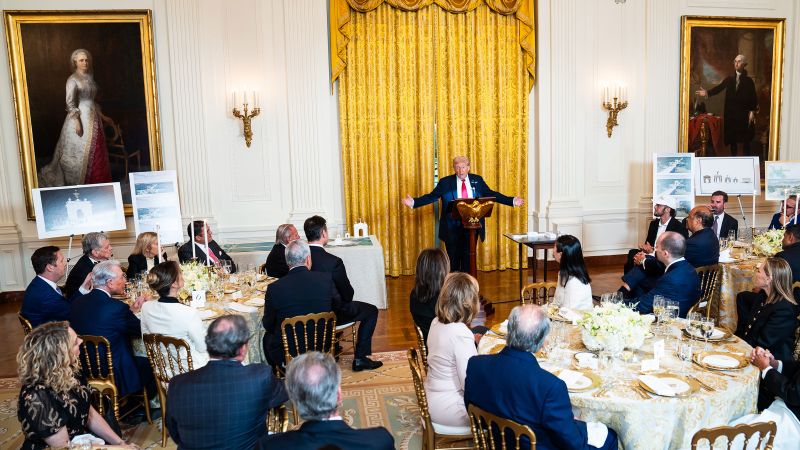
The ballroom donors were recently honored at a White House dinner, as preparations for the construction progressed. Specific categories of donors span several industries, illustrating the diverse groups financing this project. From the defense contractor Lockheed Martin, which donated $1 million, to various cryptocurrency firms like Coinbase and Ripple, both of which have made significant contributions aimed at establishing a favorable regulatory environment.
Current and former federal contractors are also part of this mix, including Booz Allen Hamilton, which has extensive ties to government contracts, and Boeing, which has received billions of dollars in federal contracts. More than just structural changes, the ballroom is expected to symbolize a melding of business interests and political support through these extensive donations.
This high-profile renovation has raised eyebrows regarding potential implications of corporate influence in governmental projects and the intertwining of business interests with the operations of the nation’s highest office. As the ballroom construction continues, the identities of the backers and the motivations behind their substantial contributions remain in the spotlight during this unprecedented overhaul of a historic site.