








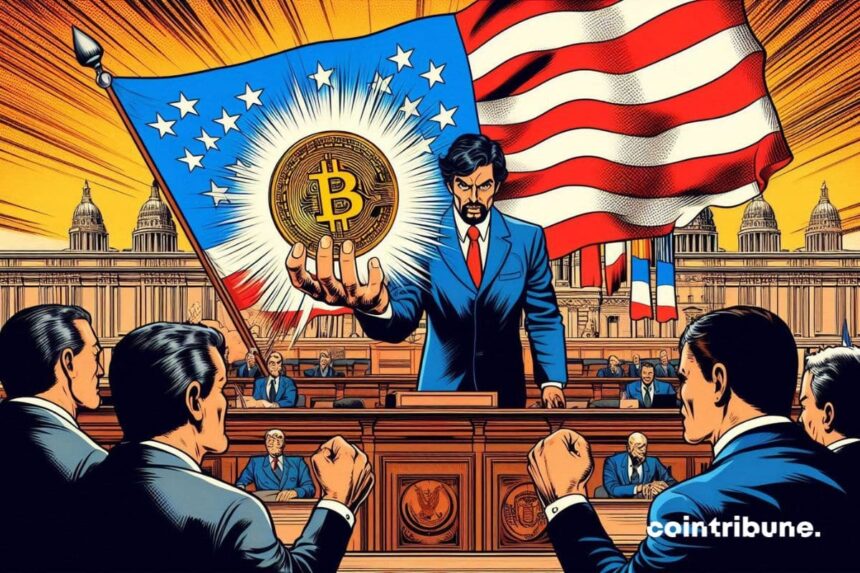
Bitcoin has emerged as a pivotal issue in France, where its adoption has sparked a heated debate involving economic prospects and political implications. Éric Ciotti, president of the Union of Rights for the Republic (UDR), has turned bitcoin into a central part of his political strategy, advocating for its potential to enhance national autonomy through the utilization of French electricity surpluses for bitcoin mining. This stance resonates with a significant portion of the French population, as recent surveys reveal that around 18% of French citizens currently hold cryptocurrencies.
Ciotti’s rationale is entrenched in the concepts of sovereignty and innovation. He posits that harnessing excess energy for bitcoin mining, rather than exporting these resources, could provide a new avenue for revenue generation and technological advancement within France. He recently emphasized the value of high-performance computing and bitcoin mining as beneficial activities that could significantly contribute to the French economy.
At the center of this debate lies Exaion, a French startup affiliated with EDF that specializes in bitcoin mining and artificial intelligence. The potential acquisition of Exaion by the American firm Mara has incited substantial backlash from French political figures, especially Ciotti, who argues that the sale threatens national sovereignty. Exaion is presented as a model that could efficiently recycle surplus energy, especially given that approximately 70% of France’s electricity is generated through nuclear means. This approach not only has the potential to minimize waste but also to stabilize the energy grid by aligning consumption with production fluctuations.
The future of bitcoin in France seems to hinge on two distinct scenarios:
-
Regulated Adoption: This path entails establishing a legal framework for bitcoin mining, complete with environmental considerations and fiscal regulations. A proposed bill from the RN/UDR coalition could facilitate a national experiment utilizing nuclear energy surpluses for bitcoin mining, ensuring that the electrical grid remains secure.
-
Status Quo: This alternative suggests maintaining strict regulatory measures, which might hinder France’s technological advancements in favor of other nations like the United States, which have already embraced more progressive policies.
As the debate intensifies, particularly with the presidential elections approaching in 2027, bitcoin is poised to become a significant political divide. Some see it as a groundbreaking opportunity, while others express concern over its speculative nature, especially with bitcoin’s recent surge to $118,000. The conversation surrounding whether France should embrace bitcoin mining using its nuclear energy resources is not just technological but also profoundly connected to the nation’s identity and its strategic future in a rapidly changing global landscape.


