







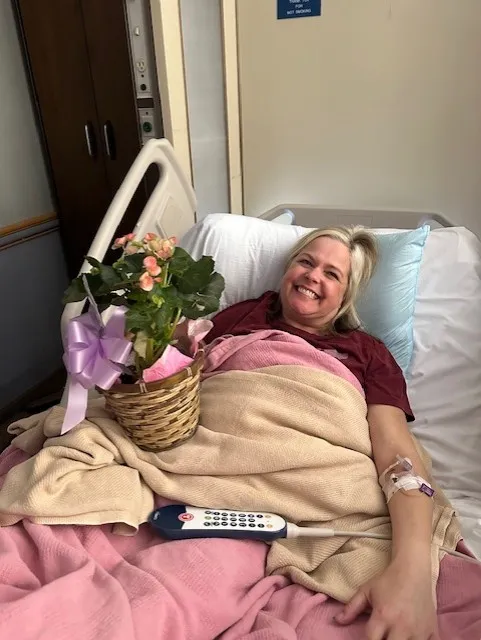
In a distressing battle for essential medical coverage, Elizabeth Early, a principal at Broken Arrow Schools in Oklahoma, is facing repeated denials from her insurance provider, Blue Cross Blue Shield of Oklahoma, for life-saving medications. The struggle has left her in a physically weakened state, unable to walk, use the bathroom independently, or even hold a fork without assistance.
Describing her situation, Early expressed frustration, saying, “I’m sick, and I need medication, and it’s fallen on deaf ears for some reason.” Her condition, chronic inflammatory demyelinating polyneuropathy (CIDP), is a rare neurological disorder characterized by severe inflammation that damages the nerves near the brain and spinal cord, drastically affecting her mobility and daily functions.
Earlier this year, Early was rushed to the hospital due to extreme pain in her legs, which rendered her unable to walk. It was during this hospital visit that doctors initiated treatment with Intravenous Immunoglobulin therapy (IVIG), which proved to be a turning point in her recovery. “I received five days of it, a six-hour drip for five days straight,” she recounted. This treatment allowed her to regain some mobility, as she was able to use a walker and put weight on her feet after the therapy.
However, hope turned to frustration as Blue Cross Blue Shield of Oklahoma denied subsequent requests for coverage of additional IVIG treatments. Despite her doctors appealing the decision with comprehensive information, the insurance company issued yet another denial.
In a bid to find an alternative treatment, Early was offered a free trial of Vyvgart Hytrulo, a daily injection specifically designed for patients with CIDP. Unfortunately, this too fell victim to the insurance company’s denial.
In an effort to challenge the decision, Early went to the Oklahoma Insurance Department for an external appeal. After careful review, the denial for Vyvgart Hytrulo was ultimately overturned, providing her with a glimmer of hope in her ongoing fight for necessary medical care.
In response to inquiries regarding Early’s case and the multiple denials, a spokesperson for Blue Cross Blue Shield of Oklahoma emphasized the company’s commitment to quality healthcare and stated they are unable to comment on specific member inquiries. They further explained that prior authorization for medications involves a thorough review process guided by the latest evidence-based clinical treatment guidelines.
As Early continues to navigate through this harrowing experience, she remains acutely aware that time is of the essence. “I do know the longer I go without treatment, the worse off it’s going to be for me in the long run,” she stated, highlighting the urgent need for effective treatment to manage her condition.


