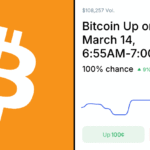
In a significant move highlighting the growing influence of cryptocurrencies in traditional finance, Woori Bank has become the first commercial bank in South Korea to display Bitcoin prices prominently in its main trading room in Seoul. This development integrates cryptocurrency pricing alongside essential financial indicators such as the won-dollar exchange rate and stock market data, signaling a shift in how digital assets are viewed within financial institutions.
According to a Woori Bank official, the decision underscores Bitcoin’s increasing importance as a barometer for market sentiment. The official noted that as digital assets gain traction in global financial markets, monitoring them has become essential for better understanding overall market trends. This sentiment is echoed across the South Korean banking sector, which is progressively venturing deeper into digital asset infrastructure.
Recently, Hana Financial Group entered into a partnership with Dunamu, the operator of the Upbit exchange, aiming to incorporate blockchain technologies into various financial services, including overseas remittances and financial data management. While Woori Bank has not yet formalized a partnership with any crypto exchange, senior executives have expressed intentions to expand their services in the digital asset arena. CEO Jung Jin-wan emphasized that the realms of payments and digital asset economies are increasingly intertwined, suggesting that these developments could pave the way for new revenue streams for banks.
As the landscape evolves, regulatory developments are also shaping the environment for cryptocurrencies in South Korea. The government, along with the ruling Democratic Party, is considering a proposal aimed at controlling the issuance of won-based stablecoins. Under this proposal, only bank-led consortia with a majority bank ownership would be permitted to issue such stablecoins, potentially positioning major banks like Woori as pivotal players in future stablecoin markets.
Meanwhile, the South Korean investment landscape has shown dynamic activity, particularly during the recent Chuseok holiday. Local investors reportedly funneled $1.24 billion into US tech and crypto-linked assets during the market closure between October 3 and 9, driven largely by increased interest in leveraged ETFs and high-growth stocks. This flurry of activity reflects a desire to capitalize on Wall Street’s momentum amid optimism about the resilience of US technology sectors and the prospects of domestic stimulus measures.
In alignment with these financial innovations, South Korea is preparing to tighten its regulations on cryptocurrency-related financial crimes. An expansion of the “travel rule” will now require identity checks for transactions below 1 million won (approximately $680), a threshold previously used to circumvent such checks. The Financial Intelligence Unit (FIU) is also set to introduce powers for pre-emptive account freezes in serious cases, allowing them to lock suspicious accounts before funds can be transferred out.
Legislative amendments to bolster these regulations are anticipated to be submitted to the National Assembly in the first half of 2026. South Korea’s efforts to collaborate with global regulatory bodies, including the Financial Action Task Force, aim to align with international standards, further shaping the country’s approach to cryptocurrencies and financial crime prevention.