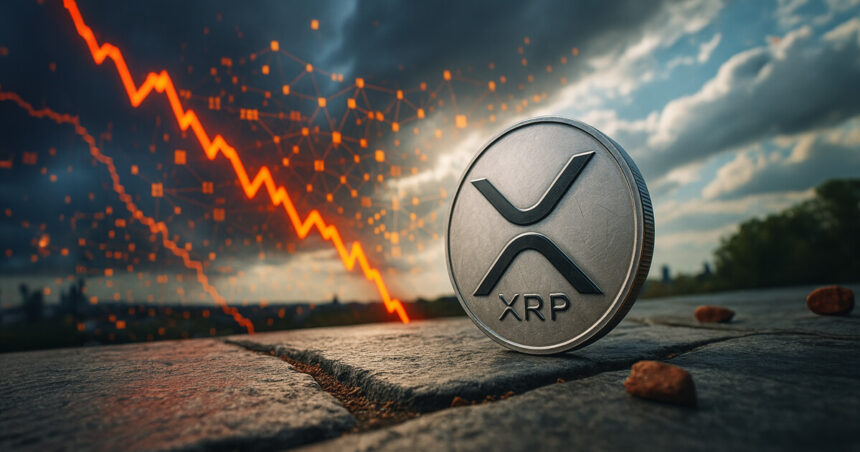
XRP is currently experiencing a pronounced disconnect between market sentiment and trading activity amid a turbulent quarter for cryptocurrencies. Recent analysis indicates that social media commentary has shifted sharply toward negativity, pushing XRP into a “Fear” zone according to sentiment data from Santiment. This downturn in mood comes in stark contrast to the increasing transactional activity on the XRP Ledger (XRPL), which has seen its highest level of engagement for the year.
Over the past two months, XRP’s price has plummeted approximately 31%, briefly falling to $2 before a slight recovery to $2.15. This decline has fueled mounting bearish sentiment, with a notable spike recorded after November’s drop in retail enthusiasm. In tandem with this decline, the XRP Ledger has been experiencing unprecedented transactional intensity, as highlighted by on-chain metrics from CryptoQuant. The network’s velocity metric reached 0.0324 on December 2, indicating a heightened frequency of asset movement, which usually reflects a busy market environment.
In a marked shift, while retail sentiment turns negative, institutional interest in XRP appears to be diversifying and generally positive. Recent data shows a significant inflow of approximately $12.84 million into XRP-focused spot exchange-traded products (ETFs) on December 4. This stands in stark contrast to losses encountered by Bitcoin and Ethereum products during the same timeframe.
These developments underscore a growing trend where institutional investors seem to be repositioning towards mid-cap assets such as XRP, evidenced by the ETF’s substantial inflows since its inception, totaling around $887 million. This ongoing interest from institutional channels suggests that, while retail investors may be disheartened by price trends, larger money managers remain committed to sodium through regulated investments.
Ripple’s recent strategic moves are significant in this context. The company disclosed nearly $4 billion in investments throughout 2025, focusing on acquisitions to transform XRP from a speculative asset into a settlement utility for corporate financial transactions. The approach includes a notable $1 billion purchase of GTreasury, which aims to integrate digital asset frameworks into existing corporate cash management systems. Moreover, the acquisition of Palisade for institutional-grade custody and the integration of Ripple Prime for institutional trading underlines Ripple’s ambition to create a comprehensive liquidity ecosystem.
The current divide between sentiment and market dynamics presents a compelling paradox for XRP. Retail traders are interpreting recent price volatility as a signal of an ongoing decline, influenced by bearish sentiment data. Conversely, institutional players seem to view this period of volatility as an opportunity to enhance their positions in the asset. Historical patterns suggest that when such discrepancies occur between market sentiment and trading flows, activity tends to dictate price movement in the long term, hinting at the potential for future price recovery for XRP.
As of December 5, 2025, XRP is ranked fourth by market capitalization, with a valuation of approximately $122.05 billion. In a broader market context, the total cryptocurrency market holds a valuation of around $3.03 trillion, with Bitcoin maintaining a dominance of approximately 58.67%.