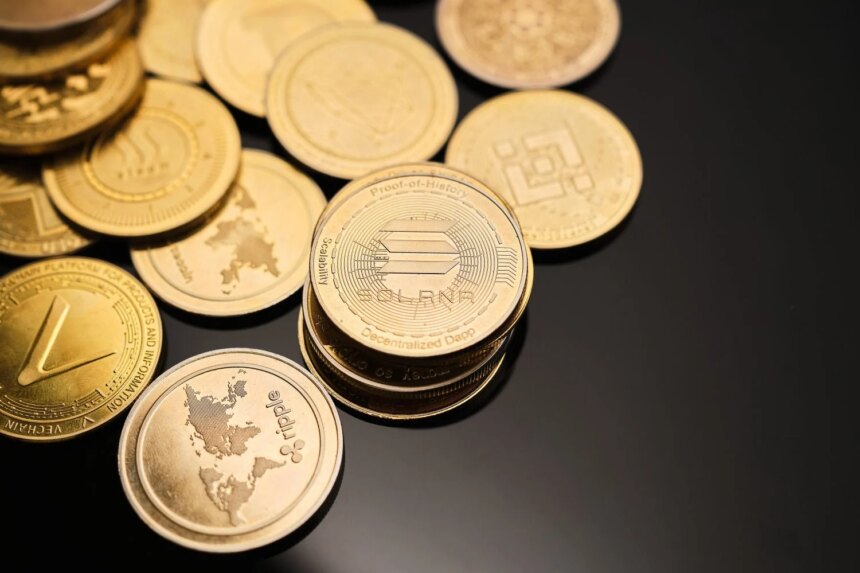
XRP and Solana continue to struggle, having been on a downward trajectory for nearly a year. After peaking at $3.65 in July, XRP has fallen to approximately $1.40, while Solana, which was once valued above $260, now trades around $89. Despite the SEC and CFTC classifying them as digital commodities, and both having live ETFs, their prices are still declining.
For investors considering a $1,000 investment, both XRP and Solana are viewed as undervalued long-term options within the cryptocurrency market. Projections for XRP suggest that by 2030, at its conservative target of $5, the investment could grow to $3,450. A more optimistic forecast places the price at $12, which would make the investment worth about $8,280, and at the high end, reaching $27 could turn the $1,000 into around $19,500.
The potential for XRP’s growth largely hinges on Ripple’s cross-border payments network achieving greater scale. Ripple has already connected with over 300 financial institutions through its RippleNet platform. The proposed CLARITY Act, currently making its way through Congress, could further facilitate institutional investment in XRP, allowing it to be treated similarly to Bitcoin and Ethereum. Recent data indicates that XRP ETFs have raised about $1.4 billion since their launch, and projections suggest that this could increase to between $4 billion to $8 billion, potentially bolstering XRP’s value. However, XRP faces competition from stablecoins which offer less price volatility.
On the other hand, Solana presents a different investment narrative. If an investor puts $1,000 into Solana at the current price of $89, they would receive approximately 11.24 SOL. Analysts have conservative forecasts suggesting Solana could reach $335 by 2030, yielding about $3,765. More aggressive targets suggest it could rise to $1,000, turning the initial investment into roughly $11,240, and in a bullish scenario of $3,200, the investment might grow to over $36,000.
Solana’s ecosystem is already well-established, hosting about $6.5 billion in DeFi value, and attracting projects in gaming, NFTs, and payments due to its high speed and low transaction costs. Upcoming upgrades aim to further enhance its capabilities, including cutting transaction confirmation times significantly, thereby positioning it for real-time payments at a larger scale. Institutional interest in Solana has also been demonstrated, with entities like Visa and Shopify utilizing Solana Pay for payment services.
However, Solana’s reliance on speculative trading and ongoing legal challenges related to meme coin launches could pose risks. Its past performance, including significant drops in value, raises questions about whether it can sustain growth moving forward, particularly in light of competition from other blockchain platforms.
When comparing the two cryptocurrencies, it becomes clear that XRP and Solana serve very different functions and appeal to distinct investment strategies. XRP’s future depends on institutional adoption as a medium for cross-border transactions, while Solana’s growth relies more on developer activity and consumer adoption in sectors like DeFi and NFTs.
Investors assessing potential returns may find that while a $1,000 investment in Solana could produce higher returns under bullish forecasts, XRP offers a more straightforward pathway with its legislative and institutional developments. Ultimately, investors may need to carefully consider their conviction in either cryptocurrency’s growth potential or consider diversifying their investment between both to capture whichever asset may perform better in the evolving market landscape.