Yeti Holdings has managed to slightly outpace the S&P 500, achieving an 18% gain in 2025; however, analysts caution that the company may struggle to replicate this success in 2026. The company’s sluggish revenue growth, combined with a significant 35% decline over the past five years, raises concerns for investors contemplating further engagement with the outdoor recreational product provider.
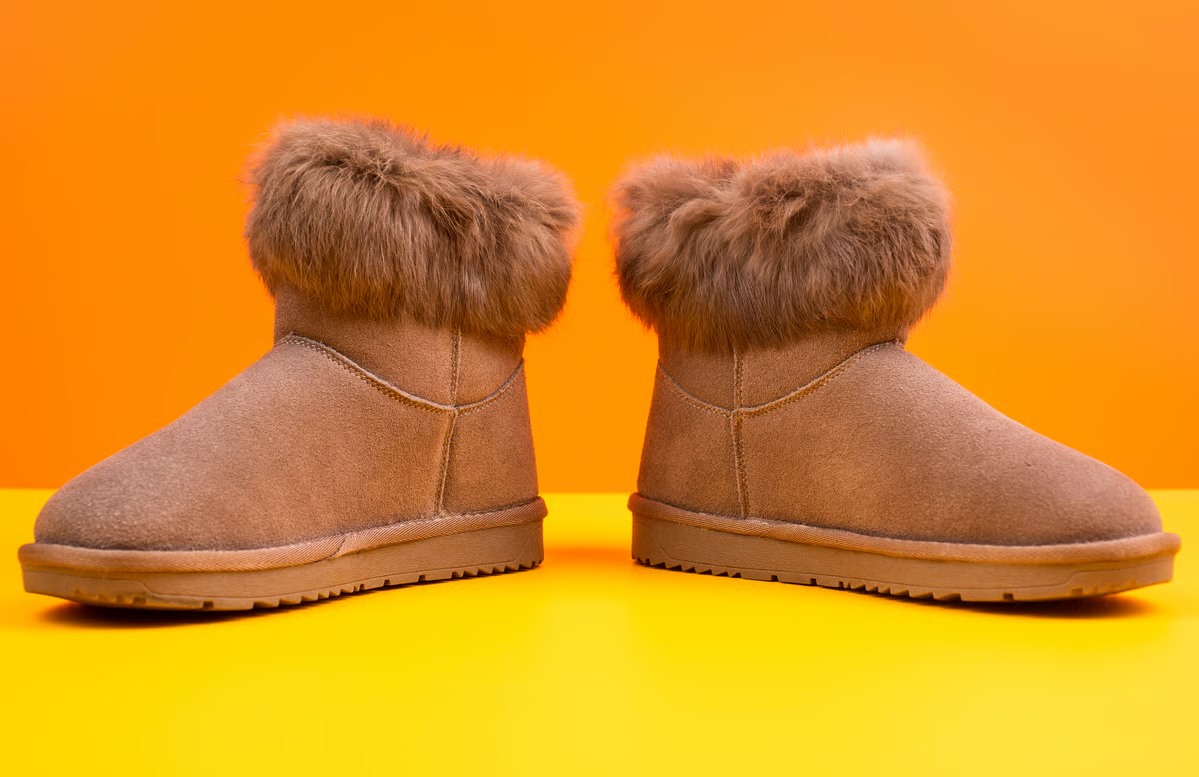
In contrast, Deckers Outdoor, known for its prominent brands Hoka and Ugg, is positioned for a potential rebound. Following a dramatic loss of nearly half its value in 2025, Deckers’ stock has doubled over the past five years, indicating strong market potential if it regains momentum.
Valuation metrics point to Deckers Outdoor as an appealing option for investors. The company’s stock currently trades at a modest 15.4 price-to-earnings (P/E) ratio while consistently demonstrating revenue and net income growth. In the second quarter of fiscal year 2026, Deckers reported that sales of Hoka and Ugg each experienced double-digit percentage growth, leading to an 11% year-over-year increase in net income. The company also achieved a net profit margin nearing 20% during this period.
Although Deckers faced a decline in domestic sales, which dropped by 1.7% year-over-year in Q2 FY26, international sales surged by 29.3%. This growth in international markets is crucial, as it represents an expanding segment of Deckers’ total revenue. Should global demand continue to rise, the company could realize substantial revenue gains, particularly if domestic sales also recapture momentum in the wake of potentially easing tariffs.
Comparatively, Yeti Holdings also reported a decrease in domestic sales, with a 14% year-over-year growth in international markets. However, this international performance is less impactful on Yeti’s overall business, as it constitutes a smaller portion of their revenue stream compared to Deckers Outdoor.
Analysts believe that Deckers Outdoor’s attractive valuation, solid sales growth, and increasing market share overseas make it a more favorable investment compared to Yeti Holdings, which faces more significant revenue challenges and a less compelling growth trajectory. With the outdoor apparel market evolving, investors are keenly observing the competitive landscape for potential opportunities as 2026 approaches.