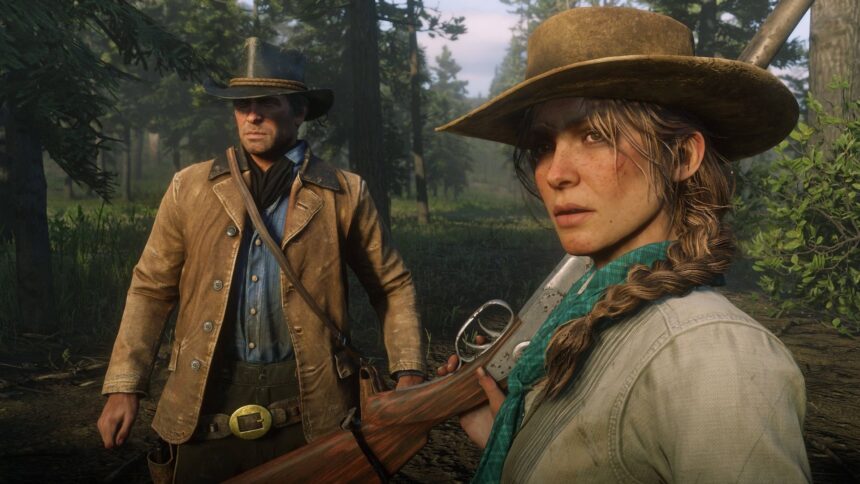
In a fascinating exploration of historical accuracy within video games, YouTuber Any Austin conducted a detailed in-game census in Red Dead Redemption 2’s fictional town of Valentine, an endeavor that reveals the impressive fidelity of the game’s world. Set in the late 19th and early 20th centuries, Red Dead Redemption 2 boasts a sprawling open-world environment that is not only vast but also richly detailed.
Austin’s approach involved dividing Valentine into an even grid and selecting random non-playable characters (NPCs) at different times of the day to gather data on various socio-economic factors. He meticulously recorded details like employment status, industry of employment, income levels, ages, and overall health, which he later compared to actual census data from the United States in 1907. His findings highlighted that, in several categories, the game scored remarkably well when compared to historical data.
While he recognized that some discrepancies existed, such as Valentine reporting a higher unemployment rate and a greater proportion of entertainment workers compared to construction workers, these deviations were minor enough that they did not disrupt the immersive experience of the game. Austin noted an amusing anomaly regarding health; the game’s representation of dental health appeared unrealistically positive, with NPCs showing more teeth than would be expected in a population from a century ago. This detail, while interesting, required close inspection to notice, thus not significantly detracting from the overall narrative.
Austin’s video not only dives deep into the methodology of his census but also engages with broader discussions about the historical representation of the American frontier depicted in Red Dead Redemption 2. He points out that many aspects of characters’ lives, including tales of iconic gunslingers like Arthur Morgan, are often romanticized narratives rather than precise historical portrayals.
Nonetheless, through the lens of real historical data, Rockstar Games’ portrayal of the American frontier stands up well to scrutiny. This experiment illustrates the dedication to detail that permeates the game, making the world feel alive and authentic. For those intrigued by the blend of gaming and history, Austin’s work offers a compelling glimpse into how games can portray societal structures while allowing players to engage with a past that is as entertaining as it is educational.