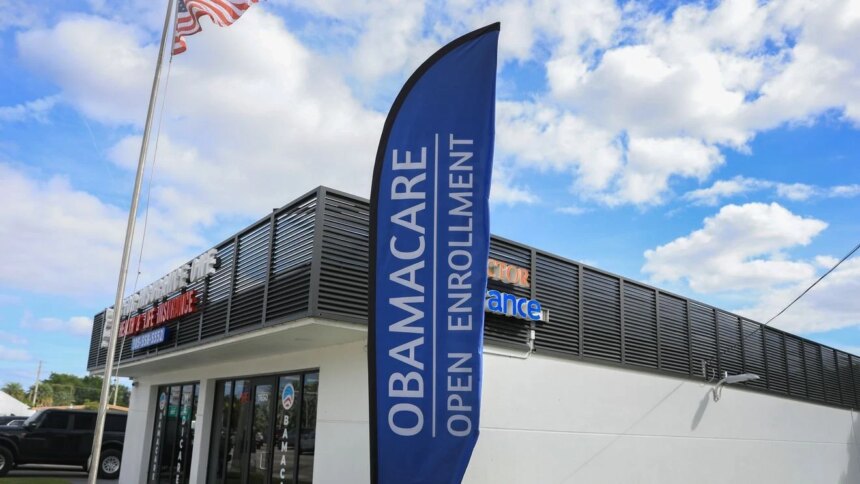
A recent report highlights troubling trends in Affordable Care Act (ACA) enrollment, as approximately 14% of enrollees failed to pay their premiums in January, raising concerns over potential future losses in health coverage. The Centers for Medicare & Medicaid Services (CMS) has already noted a decrease in ACA enrollment this year, which is further corroborated by findings from Wakely Consulting Group. The consulting firm emphasized that this alarming unpaid premium statistic suggests that millions may be at risk of losing their health insurance in the forthcoming months.
Currently, about 23 million Americans are enrolled in ACA plans through federal and state exchanges, a decline from the previous year’s unprecedented figure of over 24 million. This drop corresponds with the expiration of enhanced subsidies that had made health coverage more affordable for many. If the 14% of enrollees who did not make their January payments continue to miss payments, it is estimated that around 3 million individuals could lose their coverage.
Health policy expert Simon Haeder, affiliated with Ohio State University, estimated that by the end of the year, as many as 6 million people might drop out of ACA coverage. He attributed some of the nonpayment to individuals who may have been auto-enrolled but do not desire insurance or individuals who have obtained better coverage through employment. Haeder expressed concern at the high percentage of nonpayment and anticipates that this figure may rise as hopes diminish for the restoration of the enhanced subsidies.
Wakely Consulting reported a significant decrease in premium payments in January, noting considerable variation in payment rates between states. As many individuals faced increased costs, some may have chosen to enroll in ACA plans to keep their options open for reinstated subsidies, resulting in variability in payment behavior.
Despite looming price hikes, there remains uncertainty about how many will continue to make their premium payments in subsequent months, as many are likely feeling the impact of inflation on everyday expenses. Haeder remarked on general rising costs, likening the situation to the increasing prices of gas.
The enhanced subsidies provided under the American Rescue Plan of 2021 were extended through the Inflation Reduction Act of 2022, but their expiration has led to projections indicating that subsidized enrollees could see their monthly premiums balloon by an average of 114%. Unsubsidized enrollees are expected to face a 26% increase, leading to projections that enrollment could decline by as much as 17% to 26% this year.
Wakely observed a shift toward lower-cost ACA plans, with enrollees increasingly selecting the cheaper Bronze plan, which has implications for future healthcare coverage and costs. The decline in enrollment of the higher-quality Silver plans could lead to greater out-of-pocket expenses for enrollees, potentially causing dissatisfaction with their coverage in subsequent years.
Both Wakely and Haeder noted a concerning trend in the demographic makeup of those enrolled, suggesting that healthier individuals are opting out, leaving a pool of enrollees with more significant health issues. This shift toward a sicker group could drive premiums even higher across the board due to increased medical costs.
Uncertainties surrounding the pricing strategies of insurers are apparent, particularly as they navigate the implications of a less healthy enrollees pool. There are concerns that some insurers might exit the market if economic viability becomes a challenge, further complicating access to health coverage.
The ACA, initially stabilizing around 10.5 million annual enrollees before the pandemic, experienced a surge in sign-ups due to enhanced subsidies. However, with these financial supports now absent and unlikely to return, experts predict that enrollment could significantly decrease, potentially approaching pre-pandemic levels. Yet, population growth factors might prevent numbers from declining all the way back to 10 million.