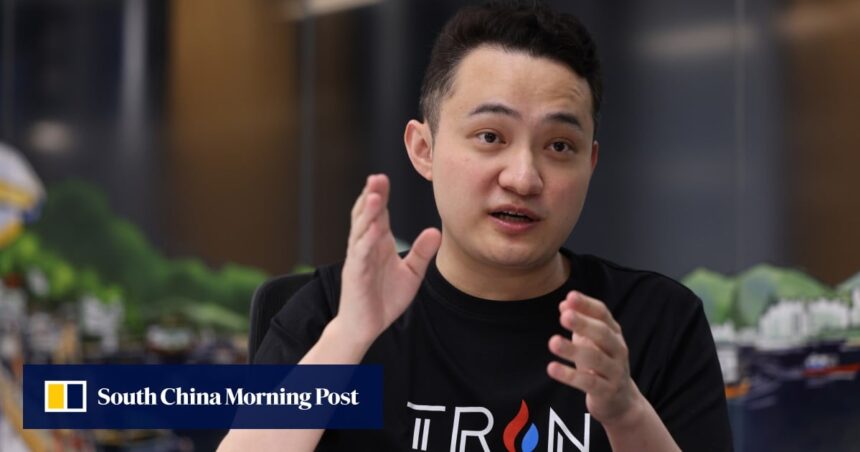
In a significant development within the cryptocurrency landscape, Justin Sun, the founder of the Tron blockchain, has publicly announced the launch of a new financial product centered around USDT, the leading stablecoin in the market. This announcement came amid increasing scrutiny from Democratic lawmakers regarding Sun’s connections to former President Donald Trump’s family.
In a social media update, Sun showcased a newly launched website dedicated to “perpetual futures” or “perps,” which are financial instruments that enable traders to speculate on the future price of assets. Sun emphasized Tron’s importance in the USDT network, highlighting that these perpetual contracts are among the initial use cases for USDT.
However, the introduction of this trading platform coincided with a public letter from Democratic representatives Sean Casten and Senator Jeff Merkley to the U.S. Securities and Exchange Commission (SEC). The lawmakers raised concerns over Sun’s “concerning ties” to Trump’s family, mentioning a range of issues related to his investments within the cryptocurrency realm.
The letter pointed out that since Trump’s re-election in November, Sun has made substantial investments in two notable cryptocurrency projects: the $TRUMP memecoin and World Liberty Financial (WLFI). The lawmakers alleged that these moves could have financially benefited Trump and his family directly.
Despite the heightened attention from Congress, Tron did not provide an immediate response to requests for comment regarding the matter. The situation places emphasis on the increasing intersection of politics and cryptocurrency as regulatory bodies begin to examine the potential implications and ethical considerations surrounding such affiliations.
The developments come at a time when the cryptocurrency market continues to evolve rapidly, with platforms like Tron seeking to capitalize on the growing interest in decentralized finance. As regulatory scrutiny intensifies, the future of investments tied to high-profile figures remains uncertain, prompting broader discussions on governance and accountability within the crypto space.