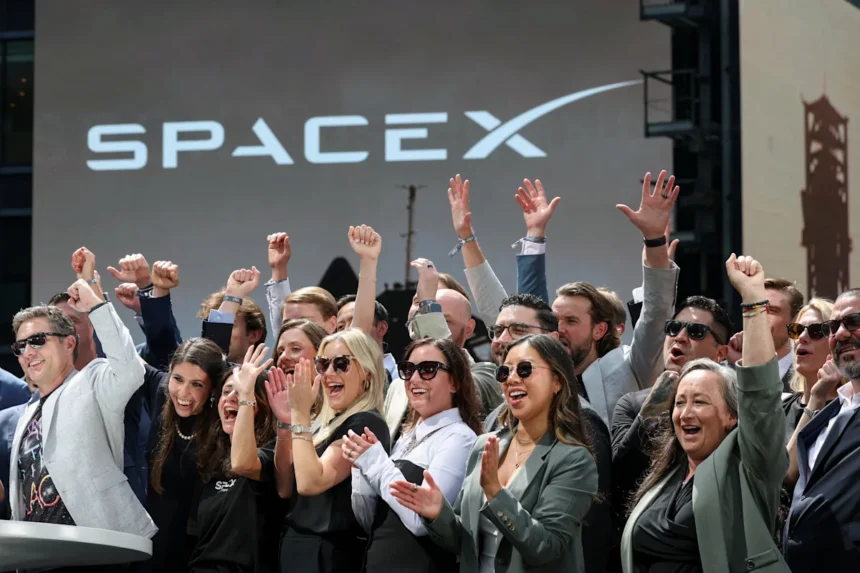
In a remarkable shift in the financial landscape, SpaceX, the pioneering rocket company led by entrepreneur Elon Musk, has made headlines with its recent public offering. On June 11, the company’s shares were priced at $135, resulting in an impressive valuation of $1.78 trillion based on the issuance of 555.6 million shares.
SpaceX marked its entry onto the Nasdaq the following day, June 12, with its stock opening at $150 per share. The strong demand from both retail and institutional investors propelled the share price throughout its inaugural trading session, ultimately closing at $160.95. This remarkable first-day performance translated into a market capitalization of $2.1 trillion, reflecting a substantial gain of 19.2% from its initial offering price.
As the sixth-largest company in the United States, SpaceX’s valuation highlights the growing trend of high market capitalizations within the tech sector. According to financial data from Yahoo Finance AlphaSpace, SpaceX’s public debut indicates a broader surge, with the total number of U.S. publicly traded companies surpassing the $1 trillion market cap milestone now reaching a record 12. This includes two other major players, Walmart and Micron, who joined the trillion-dollar club earlier this year.
Wedbush tech analyst Dan Ives emphasized the significance of SpaceX’s public entry, positing that it represents a crucial moment for the tech sector amid the ongoing AI revolution. This volatile yet lucrative market environment has seen substantial milestones achieved in quick succession since Apple first crossed the $1 trillion mark on August 2, 2018.
Despite the excitement surrounding market capitalization figures, experts caution that true value lies in the company’s capacity for innovation and the actionable projects underway to uphold or enhance their valuation in the future. As the stock market continues to display robust activity in 2026, all eyes will remain on SpaceX and its trajectory as a leader in the aerospace and technology industries.