







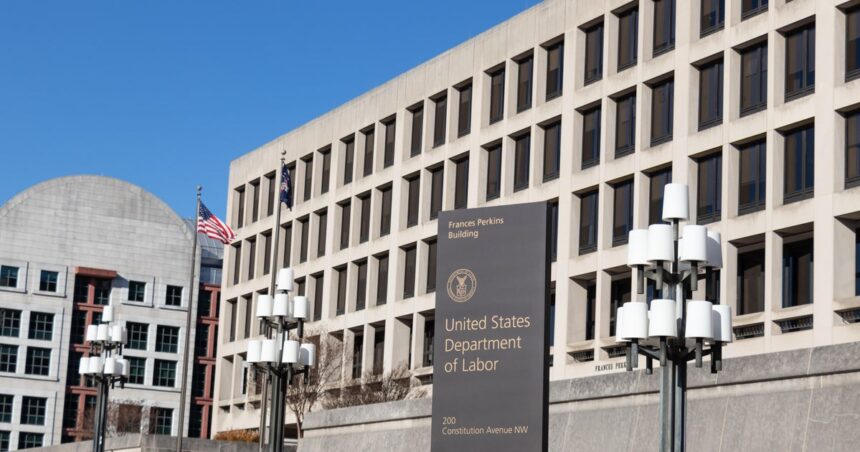
The U.S. Department of Labor has announced that it will postpone the release of crucial economic data if the federal government enters a shutdown this week, raising concerns about the availability of the highly anticipated monthly jobs report. In a contingency plan publicly shared by the Department, the Bureau of Labor Statistics (BLS) would halt all operations, which includes suspending data collection, website updates, and the release of economic reports, should government funding lapse at midnight on September 30.
The BLS is due to publish its September employment report on October 3, but a government shutdown would necessitate the cessation of all non-essential agency functions until a funding agreement is reached and signed into law. Notably, this suspension would apply to all federal agencies, with exceptions only for programs funded through other sources.
This potential disruption follows recent scrutiny of the BLS, particularly after President Trump dismissed its commissioner last month due to unsatisfactory employment figures. The scrutiny coincides with increased attention from the Federal Reserve, which is closely observing the labor market for signs of weakness amidst a hiring slowdown.
Mike Reid, a senior economist at the Royal Bank of Canada, underscored the problematic timing of a potential shutdown for the Federal Reserve, which is scheduled to reconvene on October 29. He expressed concerns regarding the lack of economic data availability, suggesting this gap might lead the Fed to reconsider proceeding with an interest rate cut during its upcoming meeting.
Earlier this month, the BLS reported that only 22,000 jobs were added in August—significantly lower than the forecasts made by economists. The forthcoming September report is anticipated to show a rebound, with expectations of approximately 50,500 new hires, according to a survey conducted by FactSet.
While some analysts believe a government shutdown would only have a limited and short-term economic impact, they caution that it could lead to increased volatility in financial markets. Delays in crucial economic reports could hinder the Federal Reserve’s decision-making regarding interest rate adjustments. Jennifer Timmerman, an investment strategy analyst at Wells Fargo Investment Institute, noted that such uncertainties could obscure the Fed’s path toward potential interest rate cuts.


