In the wake of a federal government shutdown, both Republicans and Democrats found themselves entrenched in a blame game, pointing fingers at each other for what they described as a breakdown in governance. As this impasse unfolded, iconic national landmarks—from the Liberty Bell in Pennsylvania to Pearl Harbor in Hawaii—temporarily closed their doors, preventing access to symbols of American history.
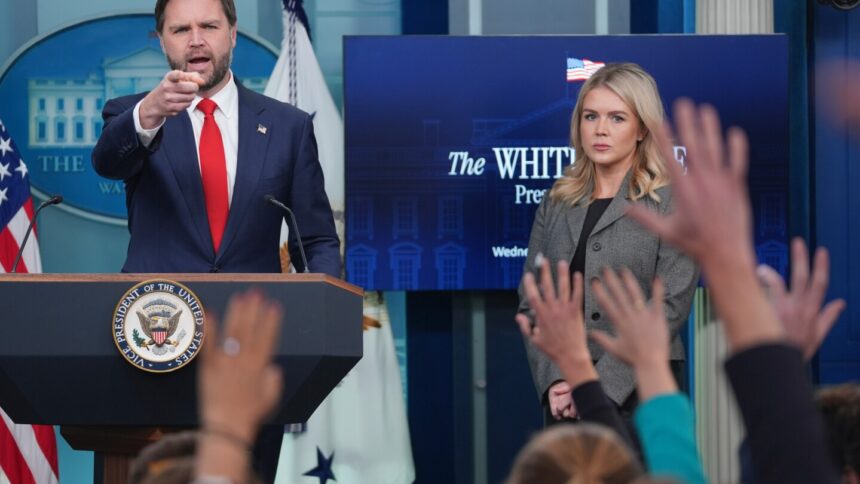
Vice President JD Vance took center stage in the White House briefing room, asserting that Democrats were to blame for the shutdown due to their supposed push to extend health coverage to undocumented immigrants. This claim was quickly countered by Democratic leaders who clarified that their focus was solely on renewing funding for health care subsidies under the Affordable Care Act, aimed at preventing a spike in insurance premiums for American families.
As the first day of the shutdown proceeded, both parties maintained their positions, signaling that negotiations were nowhere near an agreement. The economic repercussions of the standoff were already becoming evident, as predictions surfaced that hundreds of thousands of jobs and essential public services could soon be jeopardized.
The White House, through press secretary Karoline Leavitt, released a statement claiming that “Democrats in Congress have shut down the federal government because they care more about funding health care for illegal immigrants than they care about serving you, the American people.” This claim was echoed across various federal agencies, which posted partisan messaging blaming Democrats for the situation. Adding to the political theatrics, the administration showcased a deepfake video featuring House Democratic leader Hakeem Jeffries, which Jeffries condemned as a racist attack. In a retort, Jeffries created his own meme, poking fun at Vance.
While Vance speculated on a potentially short-lived shutdown, he acknowledged the grim possibility of layoffs if the deadlock persisted. Senate Democratic leader Chuck Schumer criticized Trump for allegedly refusing to engage in constructive negotiations, labeling the administration’s claims about Democrats’ intentions as blatant lies. With approximately 750,000 federal workers facing furloughs and some at risk of termination, many government offices prepared for possible permanent closures, particularly as funding cuts targeted projects in Democratic-led states.
The economic implications of the shutdown appeared particularly concerning, especially given a recent jobs report indicating a downturn in employment, with private employers cutting 32,000 jobs last month. Other budgetary decisions from the White House included holding back billions in federal funds aimed at infrastructure projects favored by Democratic senators, further exacerbating financial tensions.
Public sentiment regarding the shutdown is mixed. Past shutdowns, particularly the one lasting over 30 days during Trump’s first term, often resulted in the former president receiving significant blame. Current polling ahead of the shutdown seemed to indicate that a majority of registered voters believed that Democrats should not permit the government to halt even in the face of unmet demands. However, there remained a notable share of voters expressing that both parties bore responsibility for the standoff.
As the shutdown began to take effect, while essential federal courts remained operational, many cultural and historical sites were forced to close. Federal employees were left uncertain, with visitors to attractions like Acadia National Park in Maine expressing frustration at the political maneuvering they saw as responsible for the closures. Faced with empty visitor centers and no park rangers, some questioned the effectiveness of Congress in fulfilling its basic function of passing a budget.