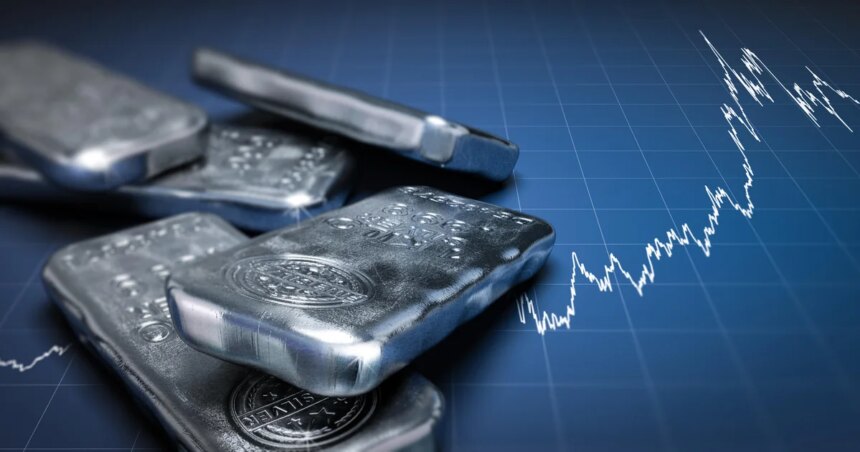
The price of silver has demonstrated a notable increase throughout the current year, particularly in light of rising gold prices that captured attention recently. This week, gold surpassed the significant threshold of $4,000 per ounce, nearly doubling its value since the beginning of 2024. As gold continues to attract spotlight due to its performance, silver also emerges as a compelling contender in the precious metals market.
As of October 9, the price of silver was recorded at $50.20 per troy ounce, reflecting a substantial increase from $28.92 per ounce in January. Furthermore, this marks just over a 103% rise compared to $24.69 per ounce in October 2020. Such growth highlights the potential for significant returns for those who invested in silver recently or several years ago.
For investors seeking alternatives to gold, especially given the current economic climate marked by inflation, geopolitical tensions, and Federal Reserve policies, silver presents itself as a more accessible option. While purchasing fractional gold or using dollar-cost averaging can ease entry into the gold market, the costs remain notably high compared to a few years back. Therefore, many investors may find the relatively lower price of silver appealing, providing an opportunity to hedge against inflation and diversify portfolios.
Without the extravagant costs associated with gold, silver can function as a valuable investment. Despite its price of approximately $50 per ounce, which may not lead to substantial wealth accumulation, its consistent rise and affordable entry point make it an attractive asset. Investors are particularly encouraged to consider silver due to current economic indicators. Reports from the Bureau of Labor Statistics indicate rising inflation, coupled with increased unemployment rates, and domestic uncertainty stemming from the ongoing government shutdown.
These factors suggest that both silver and gold may continue to experience upward price movements. As a result, potential investors are advised to consider entering the market before these anticipated surges occur.
While precious metal investments can be a beneficial component of an investment portfolio, experts recommend that they should not entirely replace other income-generating assets like stocks and bonds. A prudent strategy would involve capping investments in precious metals at around 10% of a portfolio, allowing for a balance between the stability of metal investments and the growth potential of equities and fixed income assets.