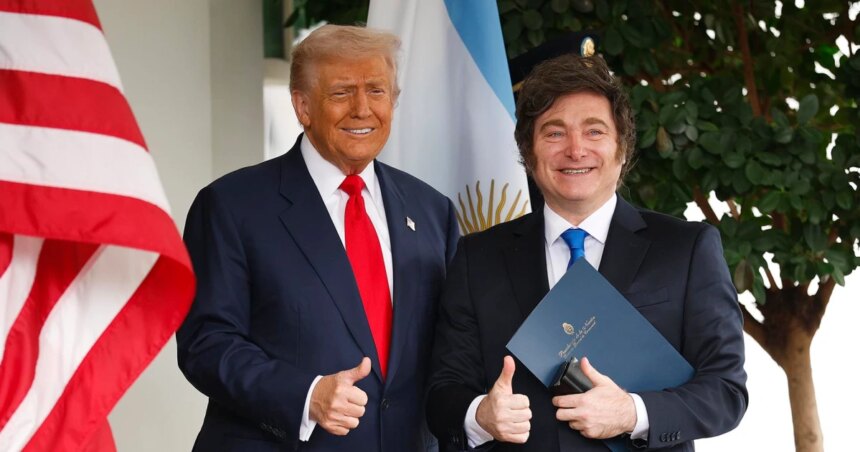
The Trump administration is reportedly in the process of finalizing a significant support package amounting to $20 billion for Argentina. This proposed funding would elevate the total backing for Buenos Aires to a staggering $40 billion. Treasury Secretary Scott Bessent characterized this initiative as a private-sector solution aimed at addressing Argentina’s upcoming debt obligations. During remarks made on Wednesday, he outlined plans for the U.S. to facilitate funding commitments from banks and sovereign wealth funds to ensure the release of the second $20 billion tranche.
Bessent’s comments were likely intended to mitigate rising concerns that American taxpayers would bear the financial burden of this substantial rescue plan. The political landscape in Argentina adds further complexity, as President Javier Milei, an ally of President Trump, is grappling with waning public support for his sweeping budget cuts and austerity measures. International investors remain wary, with reports of a sell-off in Argentine pesos reflecting apprehension regarding the sustainability of Milei’s reforms.
In response to the ensuing currency devaluation, the Trump administration has taken steps to intervene by purchasing pesos, aiming to stabilize their value. Bessent confirmed on Wednesday that these purchases are ongoing and have likely contributed to alleviating some of the currency losses. However, experts are voicing concerns that even with an influx of U.S. dollars, the fundamental issues that have plagued Argentina’s economy for decades may not be resolved. Barry Eichengreen, a professor at the University of California, Berkeley, described the current strategy as “extremely fragile” and warned about potential future financial disturbances.
However, the finer details of the funding package remain unclear. While the initial tranche of $20 billion was essentially structured as a loan, the conditions attached to the new funding from the U.S. Treasury have not been disclosed. As discussions of the expanded financial plan progress, officials are facing mounting pressure to explain why the U.S. is prioritizing funding another nation’s currency while American businesses are facing financial obstacles.
Criticism from the U.S. political landscape is intensifying, particularly from Democratic lawmakers. Senator Ruben Gallego of Arizona expressed discontent on social media, drawing attention to the disparity between the $40 billion allocated to Argentina and the lack of resources aimed at alleviating struggles for American families.
Particular ire has emerged from American soybean farmers, who are especially frustrated with the implications of Trump’s support for Argentina. Following the first round of U.S. financial assistance to Buenos Aires, the Argentine government suspended its export taxes on soybeans, inadvertently benefiting China, which promptly bought up millions of tons of soy at discounted prices. Meanwhile, American farmers face significant challenges due to an unofficial embargo from Beijing on U.S. soybean purchases.
Rep. Angie Craig of Minnesota, the ranking member on the House Agriculture Committee, expressed her discontent in a video post, criticizing the decision as a “slap in the face” to American farmers already suffering due to ongoing trade tensions.