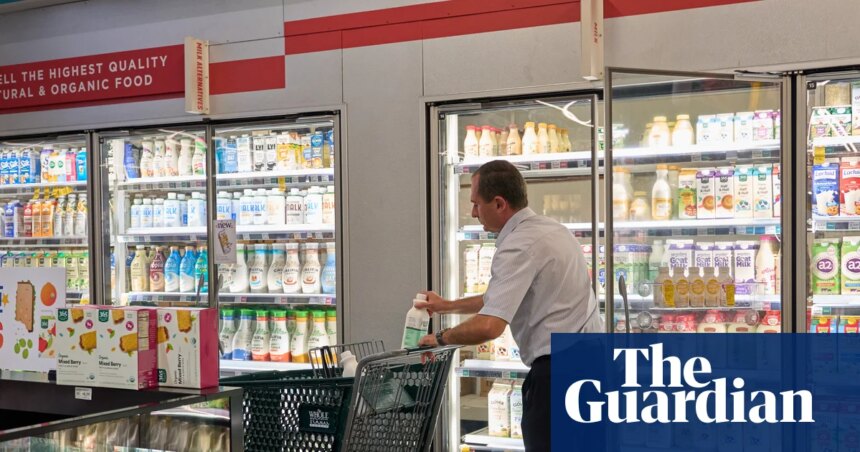
As inflation continues to strain household budgets across the United States, many families are feeling the pinch of rising prices, a situation exacerbated by tariffs initiated during the Trump administration. Paige Harris, a mother of two and teacher’s assistant from Stella, North Carolina, describes her experience: “Items that I have bought regularly have gone up in price steadily,” she remarked. “From hair dye to baby formula, our grocery list has gotten smaller while our budget has had to increase. Meats like steak are a no-go for our household.”
Harris is among nearly 40 individuals who shared their struggles with the Guardian, detailing how the economic landscape has shifted since Donald Trump announced sweeping tariffs. According to a recent study by S&P Global, companies are projected to face an additional $1.2 trillion in expenses by 2025, a cost that researchers estimate will fall disproportionately on U.S. consumers. The findings suggest that two-thirds of this “expense shock,” amounting to over $900 billion, will be absorbed by American households. Supporting this view, the Yale Budget Lab estimates that tariffs could increase annual costs for families by nearly $2,400.
Many individuals, like Jean Meadows, a 74-year-old retiree in Huntsville, Alabama, reported that these economic changes are severely impacting their shopping habits. “Prices are way too high. I mostly shop at Costco and buy as little as possible anywhere else,” she said, expressing concern that retailers are aware of this ongoing change in consumer behavior but are not adjusting in response.
Myron Peeler, also retired, echoed this sentiment, emphasizing the burden imposed by rising prices on fixed incomes. “The bread I buy has doubled in price within a year. We live on a fixed income that doesn’t keep up with inflation,” he said. The rising cost of living has left many feeling uncertain about their financial futures.
President Trump remains steadfast in his tariff strategy, viewing it as necessary for reinvigorating American manufacturing. This includes recent threats to impose a 100% tariff on China, in response to their restrictions on exports of rare earth minerals. Despite recognizing the unsustainable nature of these tariffs in a Fox News interview, he asserted that he feels pressured to maintain this economic stance.
The average U.S. tariffs on Chinese exports are currently around 58%, and the impacts are being felt acutely by Americans in various sectors. For example, a resident from northeastern Pennsylvania shared her frustration over the rising costs of necessary purchases, such as car tires. “Affordable tires are no longer in stock,” she lamented, highlighting the disconnect between prices and availability.
Across the country, individuals like Natalie from New Hampshire have voiced similar concerns about dwindling inventory and rising prices. She noted, “The store shelves have become more and more bare … instead of multiple choices, there may only be one or two, and name brands are being replaced by store brands.” Many have noticed sharp price increases for essential items, with some products like cat food rising by as much as 25% to 100%.
For others, the economic reality has shifted from purchasing regular items to making significant lifestyle changes. Minnie, a food writer in Portland, Oregon, reflected on how her shopping habits have evolved, stating, “I don’t shop for non-essentials. No fall shopping trips for a new sweater or jeans.” This month, she has opted to make all her Christmas gifts and cites the increasing cost of dining out as another area where she has had to cut back.
Despite the current U.S. inflation rate sitting at approximately 2.9%, a marked decrease from previous levels during the pandemic, the pressure from tariffs continues to impact consumer spending. Richard Ulmer, an 81-year-old Florida resident, characterized the current year as “the worst from a financial standpoint,” indicating that every aspect of his expenses, from groceries to utilities, has surged.
Cassie, a 25-year-old consultant from Siler City, North Carolina, highlighted how her grocery shopping routine has drastically changed since the tariffs began. With a strict weekly budget of $65, she now finds herself traveling to multiple stores to find better deals, a stark contrast to her past shopping habits where she relied primarily on Walmart.
The consensus among many Americans is one of apprehension and adaptation as they navigate the financial implications of ongoing tariff policies and the resulting economic landscape.